


What Are Network Signals (and Why Every Seller Should Care)?
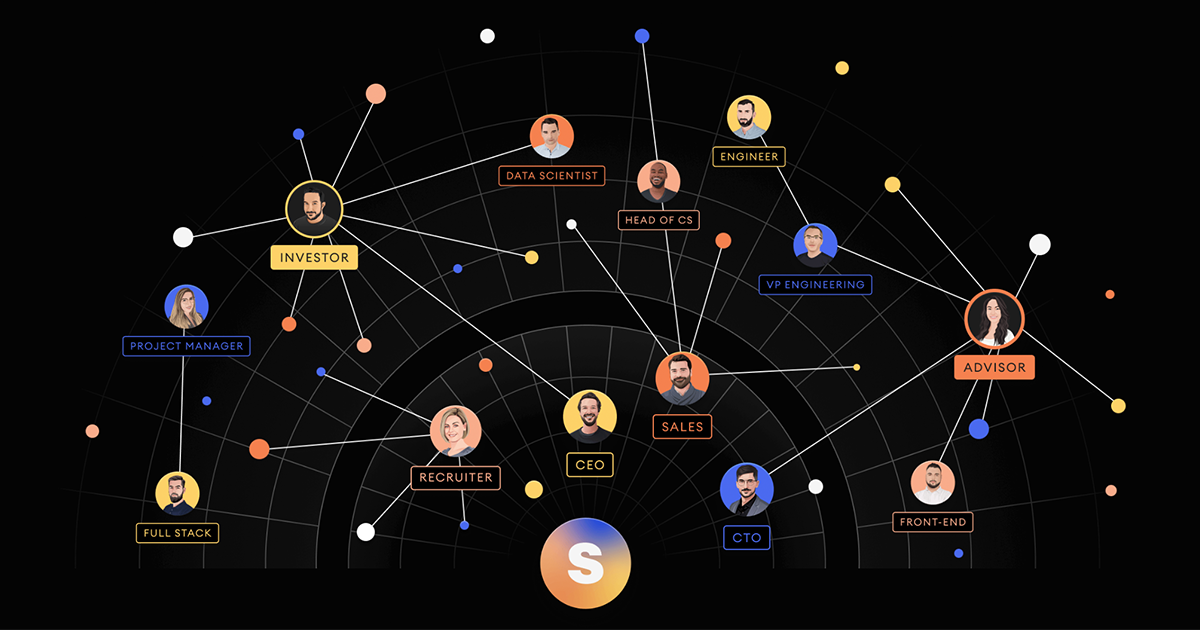
Imagine this: You’ve been working on breaking into an account for two months. You’ve tried sending cold email after cold email. You’ve called a few different times, and still no meeting is booked. Then, their LinkedIn page makes an announcement. They just raised a Series C round of funding, which means it’s time to reach out to congratulate them.
Except… every other seller is doing the exact same thing. Their messages look something like:
“Hey, congrats on the Series C funding round. When companies raise funding, they are typically looking to expand XYZ, and my company can help!”
A data point, like a company raising a funding round, is just that. A data point. It’s not exactly a reason to reach out. Unless, you can leverage network signals.
What Are Network Signals?
Network signals are the signals that live in the messy, relationship-based part of selling.
Signals that whisper: “Hey, you actually have a legit way in here.”
A network signal is a relationship-based trigger that reveals where you have a connection advantage in sales. It’s a moment when trust already exists, or can be easily borrowed, through your network.
Basically, an intent signal or a data point tells you something interesting has happened.
Network signals tell you something happened and you can act on it through people you already know. They connect the what to who, surfacing where someone in your network can help you reach the right person faster.
The key distinction is the relationship layer. It’s not just ambiguous data, it’s a signal with human context. It’s real leverage you can use to get in the door or your target accounts.
Explore relationship data for work, education and investor overlaps to see how these signals can reveal potential introduction paths.
How to Spot and Activate Network Signals
Network signals aren’t buried in some deep underground database. They’re hiding in plain sight, scattered across your existing relationships and network. The key is learning how to see them and act on them.
Start by looking where trust already exists:
- Your customers: Who’s changed jobs or joined new companies lately?
- Your partners: Which ones already have relationships inside your target accounts?
- Your teammates and investors: Who can open doors through shared connections or past deals?
Spotting a network signal is about pattern recognition. You’re not just looking for activity, you’re looking for your advantage.
Here’s are a few types of network signals to watch for:
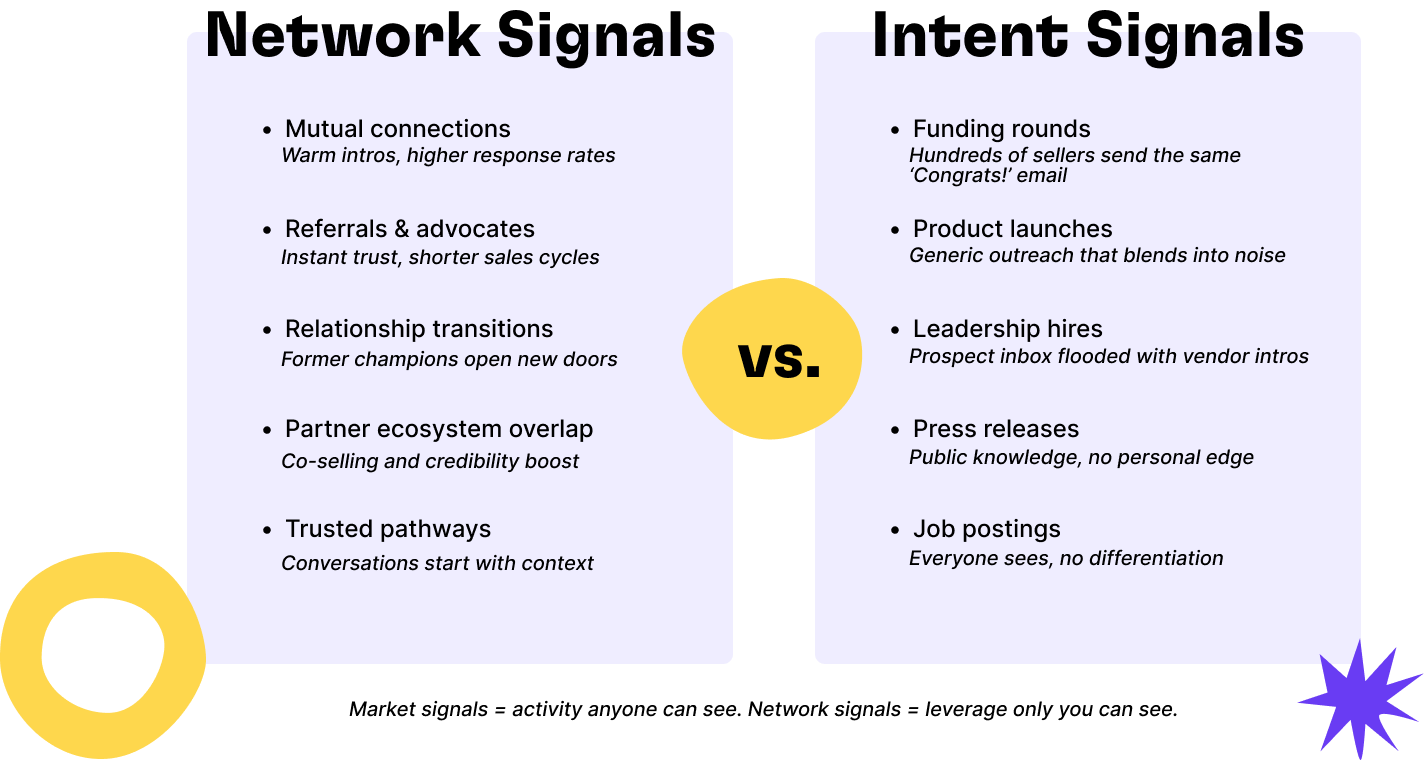
- Mutual Connection Signals - Someone in your network shares a connection with a prospect creating natural introduction opportunities. Maybe the CFO at your target account went to school with your current customer’s VP. Suddenly, that cold email doesn’t feel so cold.
- Relationship Transition Signals - When people you know, (customers, partners, former colleagues, etc) change roles and land in positions where they could become internal champions.
- Partner Ecosystem Signals - Partners, integrators, or vendors create opportunities for warm introductions or co-selling situations. An integration partner mentions they're implementing at a company that fits your ideal customer profile.
- Referral Pathway Signals - Happy customers or advocates can open doors to people you’ve never met or even know about. When trust is already established, introductions to extended networks become easy.
Every network signal gives you a warmer path to the same destination: trust.
Examples of Network Signals Hiding in Plain Sight
- A former customer just took a new leadership role - They already know your product and value. That’s a warm door waiting to be opened, no cold intro required.
- A mutual connection comments on your prospect’s post - That’s your conversation bridge. Engage on the same thread or ask your mutual to make an intro.
- A partner announces a new deal with your target account - You’re already in their orbit, co-selling or co-marketing can get you inside faster than cold outreach.
- Your company advisor or investor is connected to a target exec - Instead of another cold email, activate your shared credibility. A 20-second intro message from them beats 20 cold calls from you.
- A happy customer tags your company in a success story - Their public praise is social proof. Check who’s liking or commenting on it. Those reactions often include new prospects in your ICP.
- Someone in your network just got promoted - Promotions signal influence, and gratitude. Congratulate them, and re-spark the relationship while they’re expanding budgets and teams.
- A colleague used to work with someone at your target account - This is one of the most underused internal signals. A quick Slack message like “Hey, how well do you know them?” can unlock a trusted intro.
- A past prospect joined a new company - Just because they didn’t buy before doesn’t mean they won’t now, new role, new context, same great relationship.
- A community member or event attendee mentions your brand - That’s a warm echo of awareness. Reach out while the conversation is fresh — it’s not cold if they already know your name.
- You notice overlap in followers or engagement on LinkedIn - Mutual engagement patterns often reveal network clusters — people who already trust each other (and might soon trust you).
When you sell through network signals, the rules change:
- Response rates jump because trust comes first.
- Sales cycles shorten because doors open faster.
- Conversations feel human because they’re rooted in connection, not a template.
You’re turning “ugh another cold email in my inbox” into “oh, a note from a friend of a friend.” And in B2B where people buy from people they like and trust, that’s how you build pipeline.
Stop chasing signals that anyone can see. Start chasing the ones only YOU can act on.
Your network is more than a LinkedIn list. It’s a living, breathing pipeline. Treat it like one.
For a practical workflow, follow our HubSpot warm-intro tutorial. For a customer example, read how Costanoa Ventures built a warm-intro engine using specialized networks, Clay and AI tools.
Read more about network signals here.


