


How to Write a Forwardable Email: Steps & Examples
You’ve got three seconds to get their attention. Keep your emails under 50 words. Break the lines up. Don’t add links. Don’t introduce yourself. Tell them their pain point. Use an AI SDR.
Earning someone’s attention has never felt more robotic.
Introducing: The Connection Economy.
It’s where attention still matters, but trust and relationships are how you get it.
The Connection Economy is where value is created through the strength, quality, and extensiveness of relationships and networks. It represents the shift from attention-based selling to relationship-based selling. Growth is no longer driven by who can capture the most attention, but by who can build and activate the strongest network of trusted relationships.
As Michael Leibovich put it, the Connection Economy is what comes after the Attention Era. It’s where the scarcest resource isn’t eyeballs, but trust.
At Commsor, we see that same shift reshaping sales. When everyone’s chasing attention, network-driven trust is what actually moves deals forward.
The Forces Powering the Shift
Artificial intelligence has led to content oversaturation, and a seemingly infinite supply of content has led to a lower value of attention. There’s a massive erosion of trust with deepfakes, fake reviews, and AI slop.
Human connection is the remaining scarce resource.
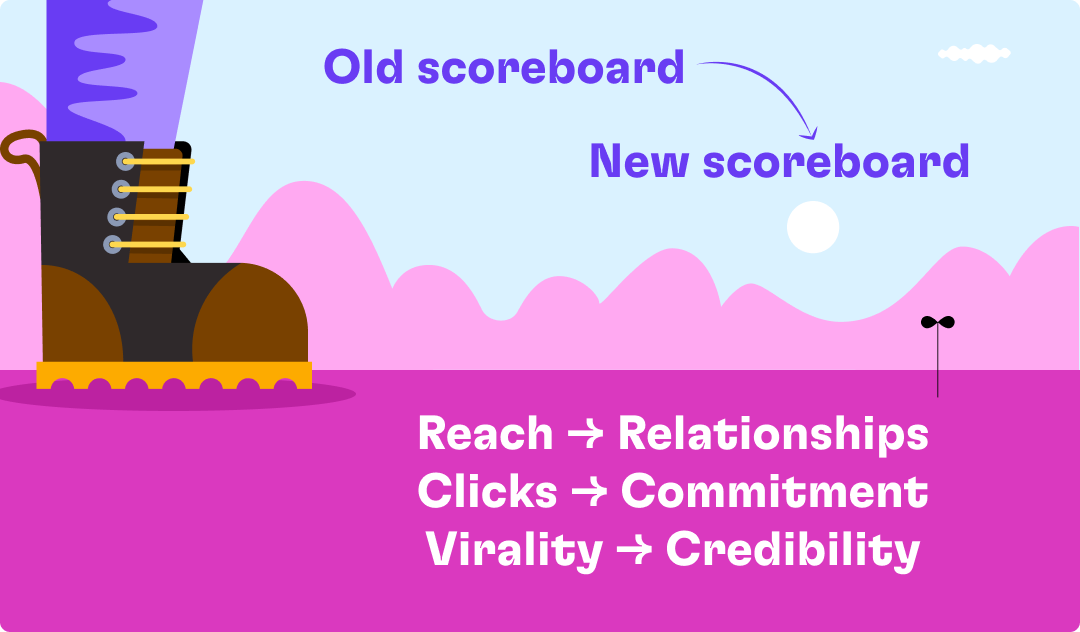
The Connection Economy changes the game with a whole new scoreboard.
"We open LinkedIn and ask, 'Does anyone I follow actually use these?' The trust that once sat in the hands of search engines has shifted to social networks, creators, and communities.
Buyer behavior is driven less by technical specs on a webpage and more by whether real people vouch for the product. Social proof has moved from being a “nice-to-have” to being the core of how buyers evaluate options.
- Mark Kilens, VP of Marketing at EasyLlama
Companies must re-architect their go-to-market strategies to focus on connection-based strategies. Basically, shifting to a Go-to-Network approach.
Go-to-Network is a strategic business strategy where a business activates their networks including: Investors, communities, partners, customers, and employees, to drive growth. It’s all about operationalizing connections.
In this system, sellers and marketers act on relationships, not just build them. They listen to the market and scan for network signals, indicators that they have a mutual relationship with a buyer. Network signals are the signals that live in the messy, relationship-based part of selling.
Signals that whisper: “Hey, you actually have a legit way in here.”
How to Thrive in the Connection Economy
Map Your Relationship Network
Most teams spend hours refining their ICPs, segmenting accounts, or chasing intent data. And you should absolutely be doing all those things, but you should also ask:
Who in our existing network can open the next door?
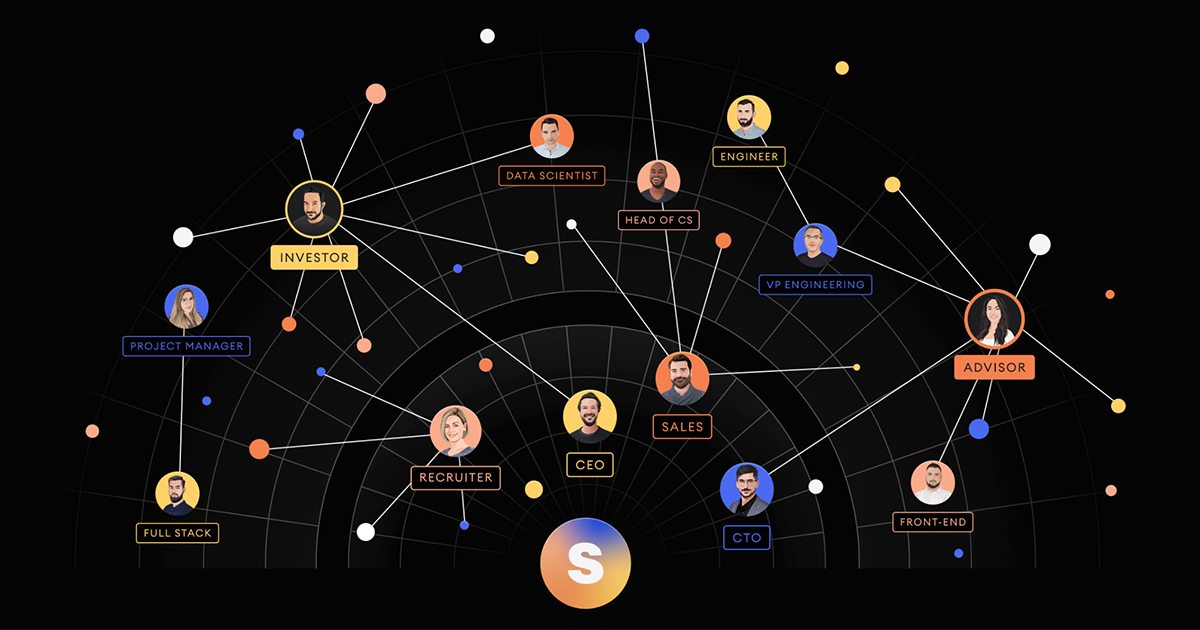
Mapping your network first starts with visibility. Every seller, marketer, founder, exec, investor, and advisor has their own unique network. They each bring a web of connections. When you map those relationships out, patterns start to show:
- A former customer just took a leadership role at a target account
- A partner is already selling to you dream logo
- A mutual connection can make a warm intro that turns a no reply into a “Let’s talk.”
Here’s how to start mapping your network:
- Pull your data together. Export your LinkedIn, CRM, and other data that shows your network connections
- Identify your strongest Connectors. Look through the list and think about who you feel comfortable asking for introductions from. These are people who would naturally advocate for you.
- Tag relationship strength. Choose a scale and assign numbers to the Connector list.
- Surface network signals. Track job changes, funding rounds, and engage with your partners. These signals show you where your network is giving you an advantage.
And all of this is made much easier in Commsor. We do all this work for you, so you don’t need to do it manually.
Layer Network Signals Over Intent Data
Intent data tells you who’s interested. Network signals tells you who trusts you.
Both matter, but working together makes your spot in the Connection Economy thrive.
In the attention economy, each seller has access to the same exact pieces of data. Funding rounds and job changes are valuable context, but it’s also crowded. When hundreds of reps are chasing the same signal, your “personalized” outreach just gets overlooked.
Network signals reveal your unique advantage.
How to Combine the Two:
- Start with a traditional signal
- Layer your network data
- Act with context
- Track outcomes
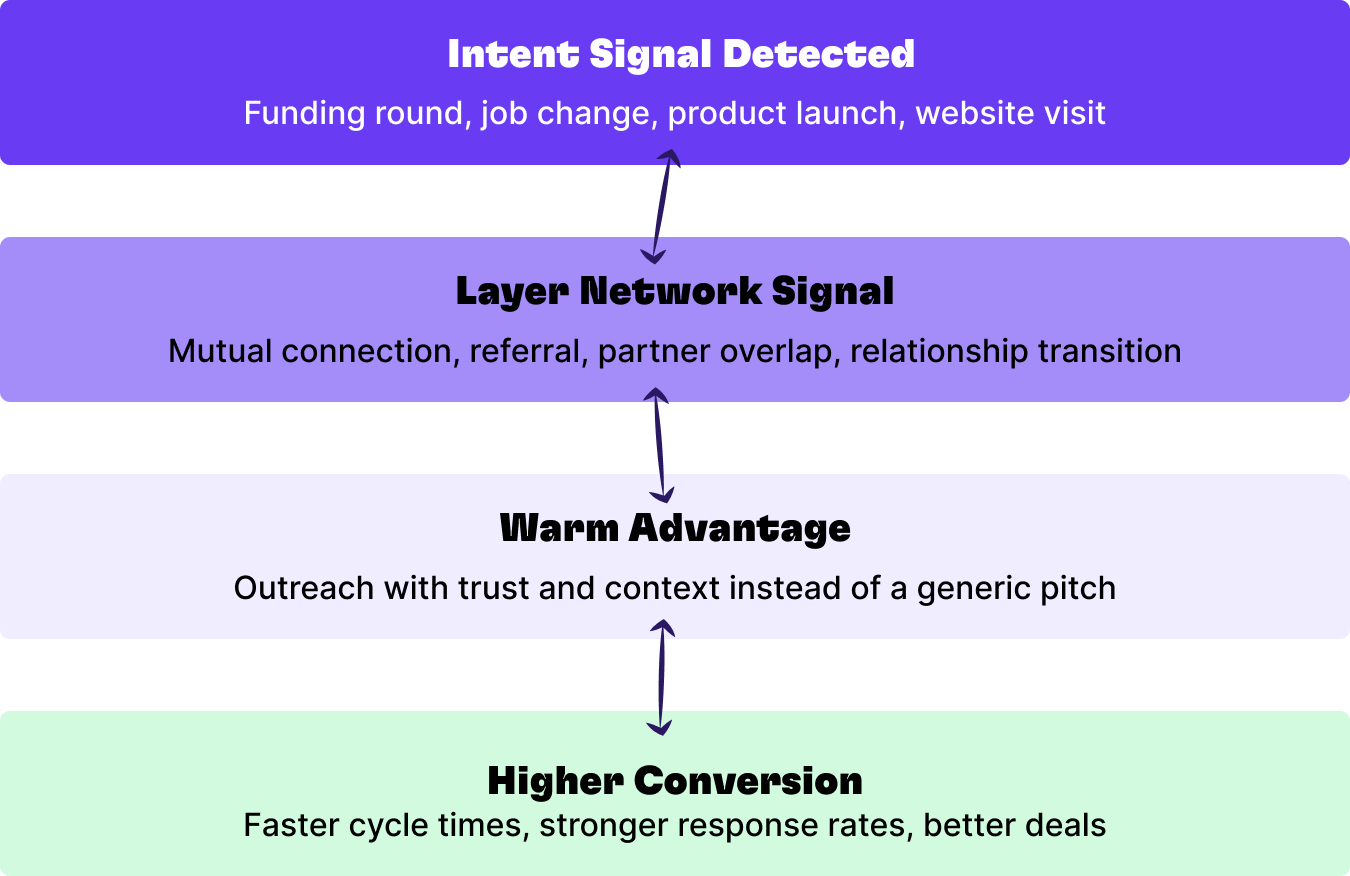
When you combine intent data’s where to look with network signals’ who to talk to, you stop chasing the same leads everyone else sees, and start activating the relationships only you have.
Prioritize Trusted Messengers
You can write the perfect email, craft the sharpest pitch, and time it perfectly. But, if it lands in a stranger’s inbox, it’s as cold as the Ice Age.
That’s why every outreach should start by asking one simple question: Who’s the most trusted path into this conversation?
Messager > Message
A trusted messenger might be:
- A customer who loves your product and is happy to vouch for you
- A partner that already knows the account’s contact
- A former colleague who now sits at your target company
- A mutual connection willing to make a quick intro
Instead of spending time on sending 100 emails, prioritize finding a trusted source that can open the deal faster.
Turn Advocates Into Amplifiers
It’s your customers, your partners, and your community that don’t just spread awareness. They spread belief.
They’ve tried your product, they have first hand experience talking to the team, and they have access to the trust you need.
Unlike attention, belief can’t be bought. It’s earned through trust, consistency, and real connection. All things that take time, but all things your advocates can speak to first hand.
How to turn relationships into reach:
- Spot your natural advocates. Look for customers that already talk about your product, partners who share your content, and community members who refer business on their own.
- Give them something to share. Create moments in your relationship that they want to talk about.
- Close the loop with recognition. Celebrate your advocates and amplifiers publicly by tagging them in wins, and thanking them in updates. Give credit for the intros and opportunities that they create.
- Feed the flywheel. Each amplified connection leads to new trust, new intros, and new connections. Read more about building a sustainable go-to-network flywheel here.
AI has made content feel cheap, but trust remains costly. Those who scale relationships, not impressions, will win.
Learn how Commsor operationalizes trust in the Connection Economy. Book a demo.


