


Go-to-Network for Sales
Introduction and Foreword
What is Go-to-Network?
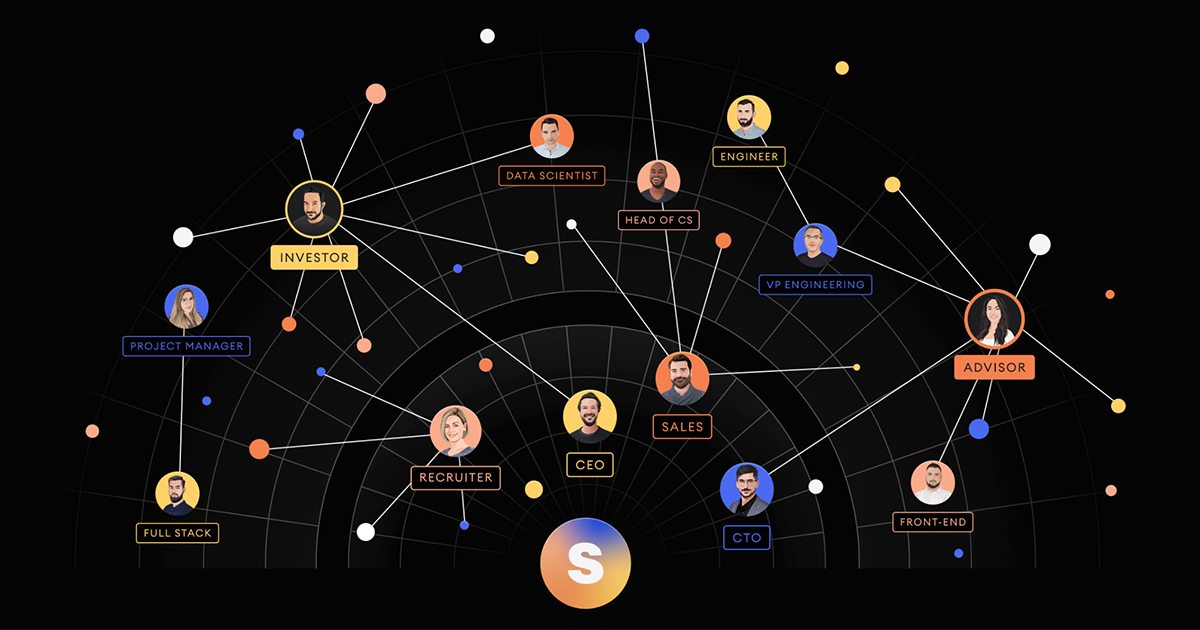
Go-to-Network (GTN) is a strategic approach and model where a business activates networks including customers, partners, investors, and communities to drive growth.
While traditional Go-to-Market strategies focus on direct channels and a linear funnel, GTN focuses on network creation and pulling the market into your direct sphere of influence.
Outbound is increasingly complex and costly—while waning in effectiveness—making GTN an exciting strategy to consider and embrace. Pair that with a drive for efficient growth rather than growth at all costs, and you’re left with a situation where GTN is critical.
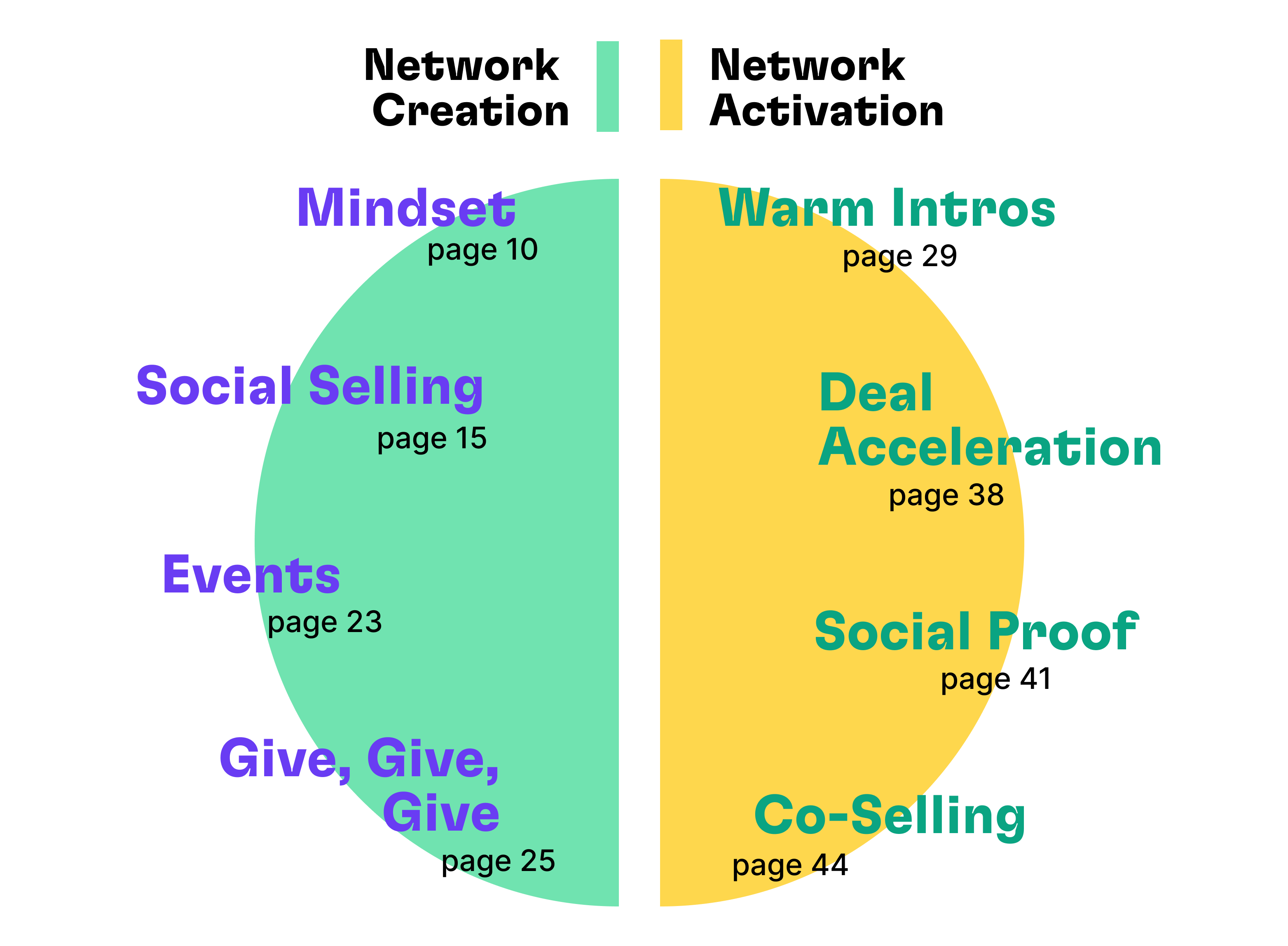
Executing on Go-to-Network requires investing in two halves: network creation, activities that bring buyers into your sphere of influence; and network activation, how you turn those networks into business value.
About this resource:
If you booked the same amount of meetings last year, but 20% of them had come from warm intros and referrals, how much more revenue would you have made, on average?
17%. With the exact same number of meetings booked. Why?
Because warm intros and referrals are more likely to close, faster to close, tend to spend more money, and less likely to churn than deals booked from other sources.
Every seller knows this, but typically they treat referrals as something that “just happens when they happen”. Most don’t realize that by adopting Go-to-Network thinking and strategy, they can operationalize and get 20%, or even more, of their meetings this way.
In this playbook, you will learn how to both create and activate a network with stories, tactical guidance, and templates you can start using today.
Our hope in creating this resource isn’t to encourage you to stop other sales activities that are working for you but rather to give you guidance on layering additional sources of warm, sustainable revenue for you and your organization.
Because tactics are temporary, but your network is forever.
Why You Need Go-to-Network in Your Sales Strategy
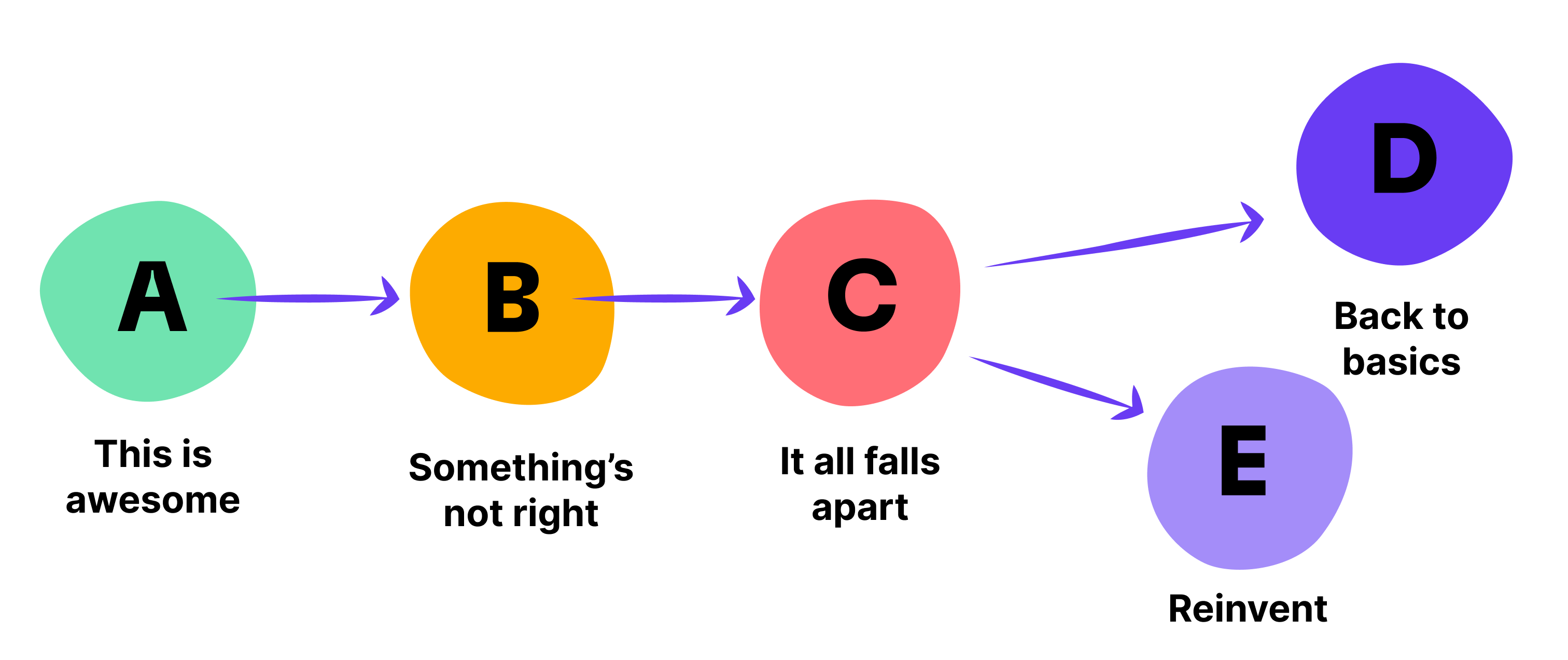
The predictable revenue model isn't quite so predictable anymore. AI is exciting, but it’s also sending shock waves of fear through every industry. With AI, tactics are going out of style in a matter of days instead of months or years. Managers are trying to wrangle their teams and meet new expectations, but by the time they figure a tactic out, it’s overplayed.
The Path of Destructive AI Creation
“The world is changing so fast, it’s giving everyone anxiety. Nothing is predictable anymore. What’s working today is warm introductions. But no matter what happens in the future, relationships will always cut through the noise. ”
Aaron Ross - Sales Advisor and Author of Predictable Revenue
“Predictable revenue is broken. It’s pointless to optimize something that doesn’t work. Switching from GTM to GTN is the epitome of work smarter, not harder. The GTN model isn’t new—it’s bringing the Rolodex into the modern age.”
Eric Iannello - Head of GTN Sales at Commsor

For the past 10 years, many companies have been built on a model of "growth at all costs.” Budgets were big, selling was relatively easy, and buyers were eager to try new tools.
But now, sustainable and efficient growth is rewarded. Spending has stalled, and buyers are more cautious about spending money.
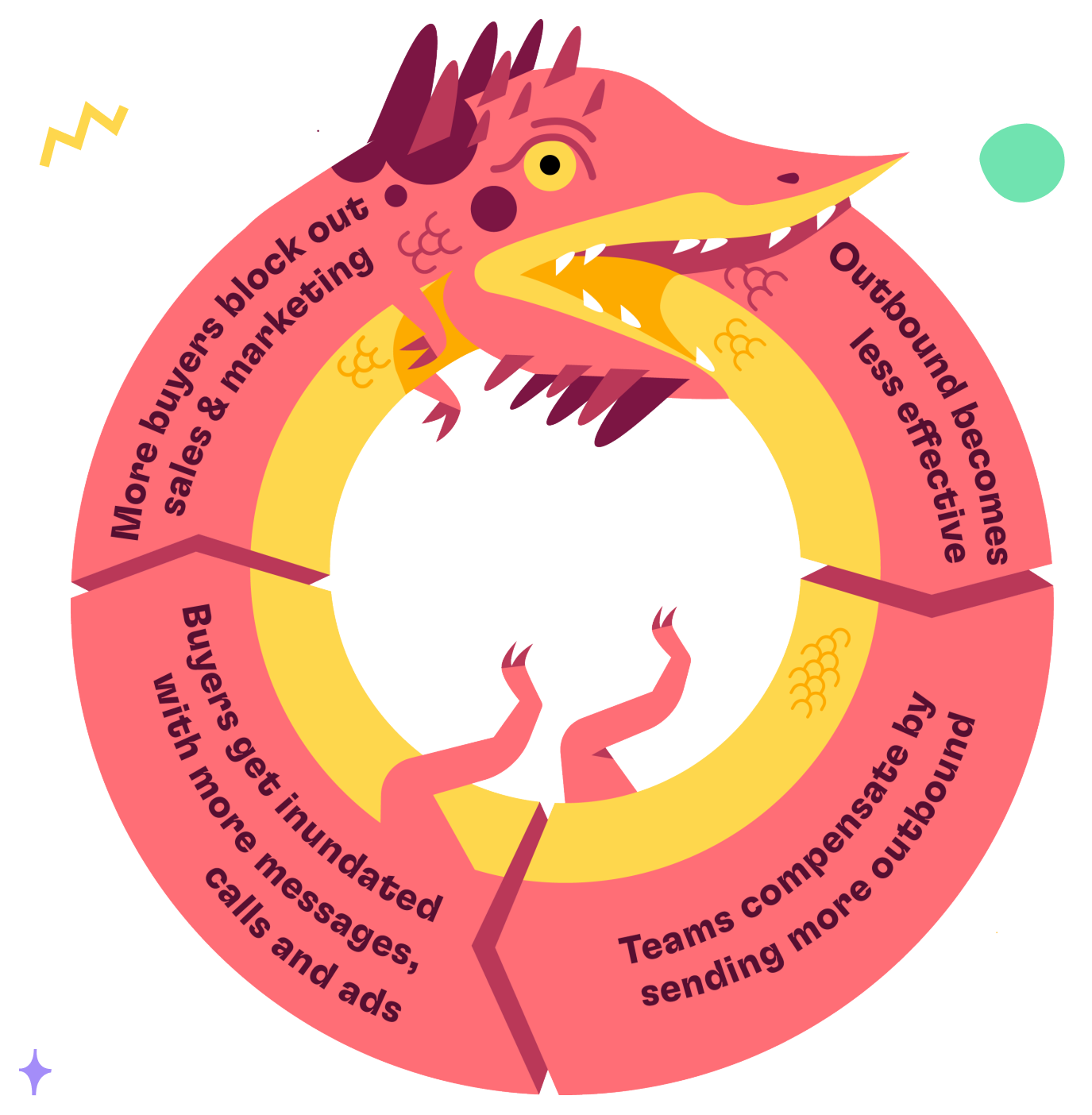
Selling has gotten a lot harder, but sales leaders are still trying to create predictable revenue systems. They continue to be focused on input metrics, pushing their team to make more calls, send more emails, hoping to find something perfectly predictable. Spoiler alert - nothing in sales is perfectly predictable, and this push for quantity is creating the very system in which your outreach becomes less effective. We’ve created an outbound ouroboros.

Buyers are getting better and more intentional at ignoring cold outbound, even as sales teams try to gobble up their decreasing attention spans. This leads to sales teams pushing even more outbound, which in turn makes buyers pull back further. Rinse and repeat and repeat and repeat and repeat....
The Outbound Ouroboros continues to devour itself:
In light of this, more companies are turning to their network. Some call it a community, others call it their ecosystem. But across each of them, it’s a combination of advisors, investors, partners, customers, and executives. By adopting Go-to-Network strategies, companies can shift tack and fight back against the outbound ouroboros.
At the end of the day, GTN is a quality game. In a sea of revenue teams trying to scale the quantity game, quality is how you stand out and ultimately win.
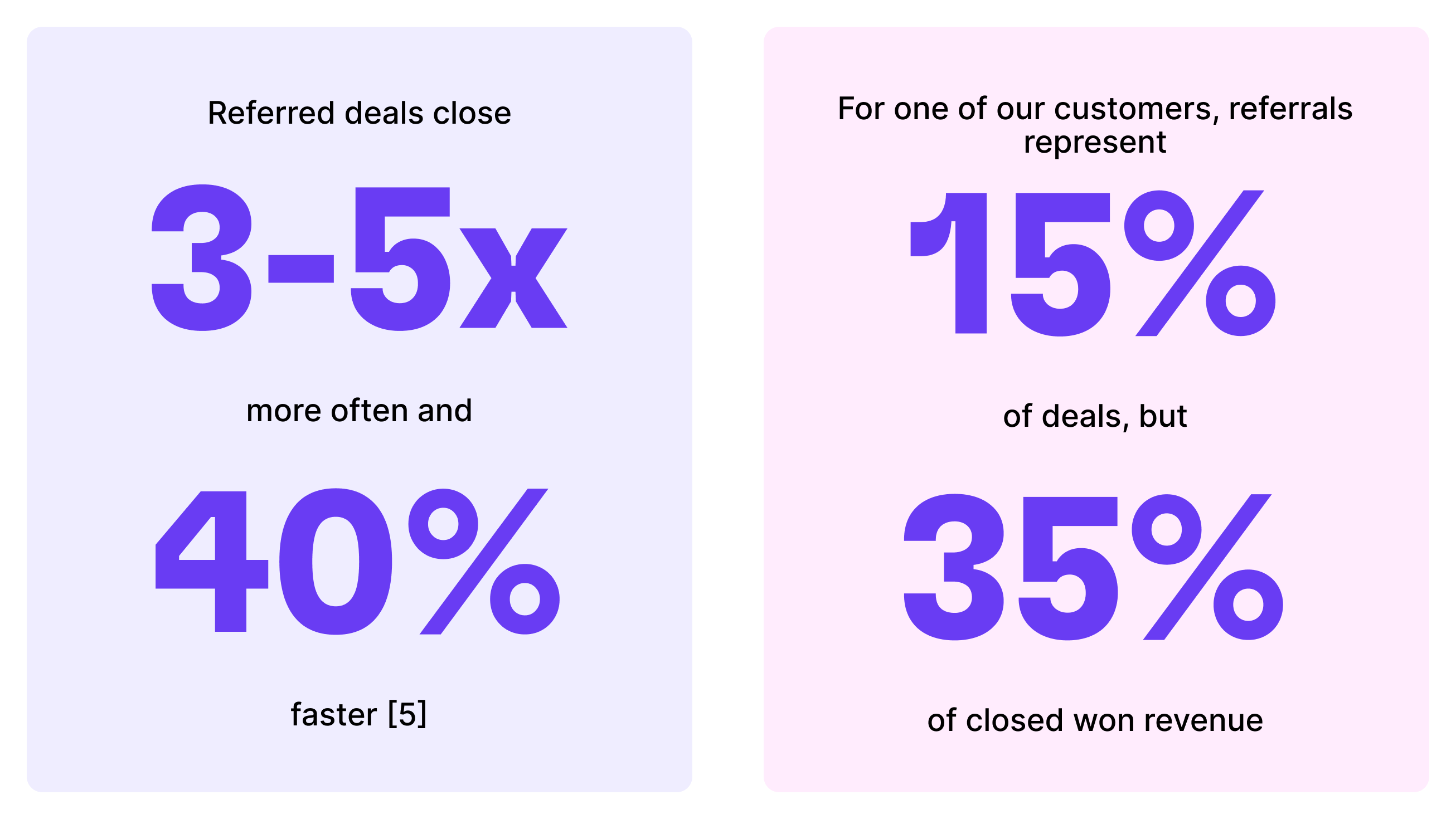
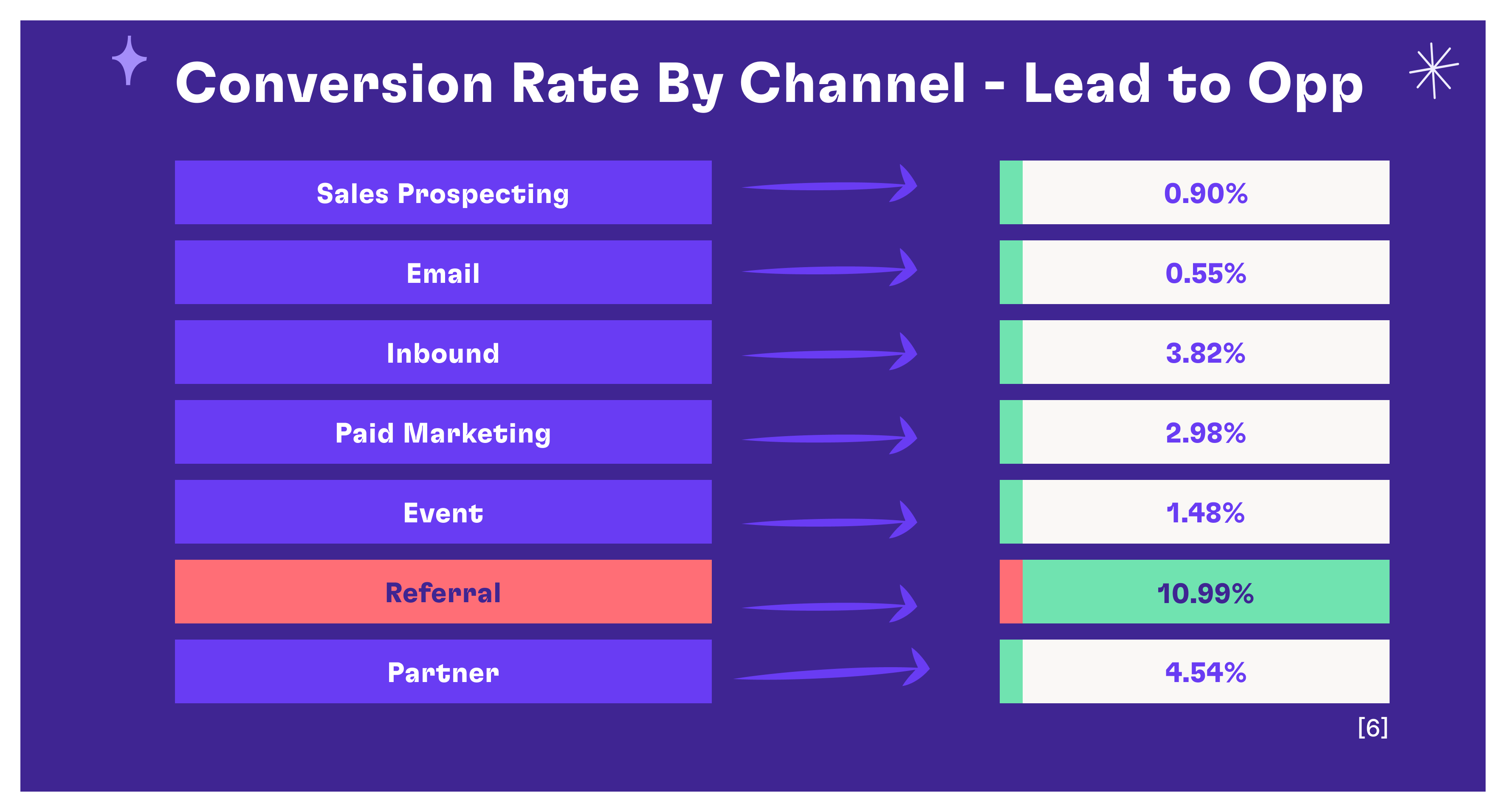
It’s not just about creating networks, but also about activating networks to drive and influence new business. The numbers speak for themselves:
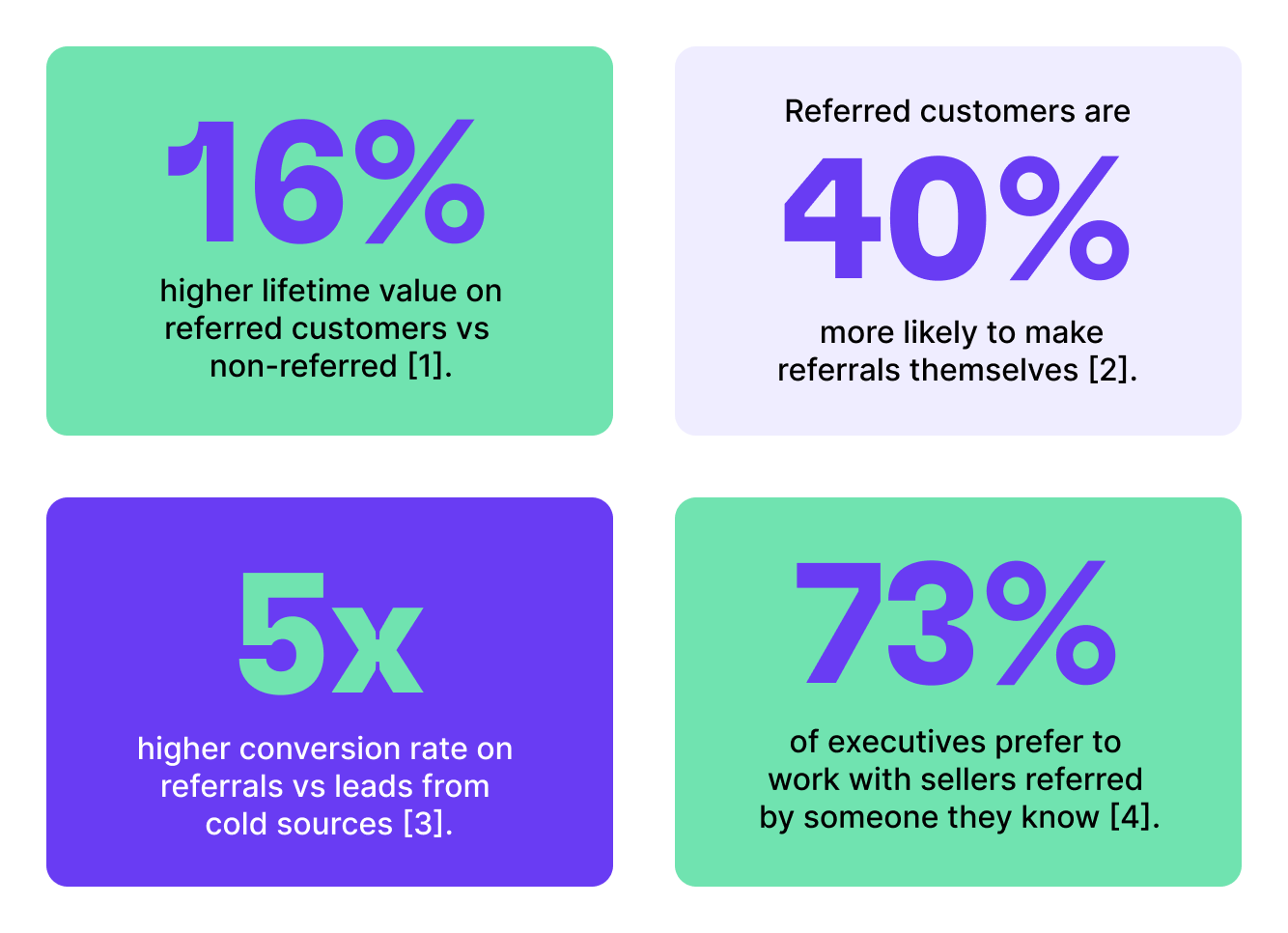
Referral stats on value, likelihood, conversion, and executive preference

GTN is about so much more than just referrals and asking for intros. A stronger network leads to more brand awareness, more word of mouth, stronger brand affinity. All things that become more and more critical as AI makes every other part of business easier to copy.
But those outcomes are often harder to measure with hard numbers, so let’s focus on the outcome of referrals and warm intros to show the impact of GTN on the most important number for a business - revenue.
This table REAL numbers from a company, tracking their sales funnel from meeting to closed won over the course of a few months. As you can see, referrals and warm intros, on average, only represented 15% of meetings booked. Many of your favorite LinkedIn influencers would look at this table and proclaim that social, cold calls, and cold email are the best channels. After all, they represent 75% of meetings booked!
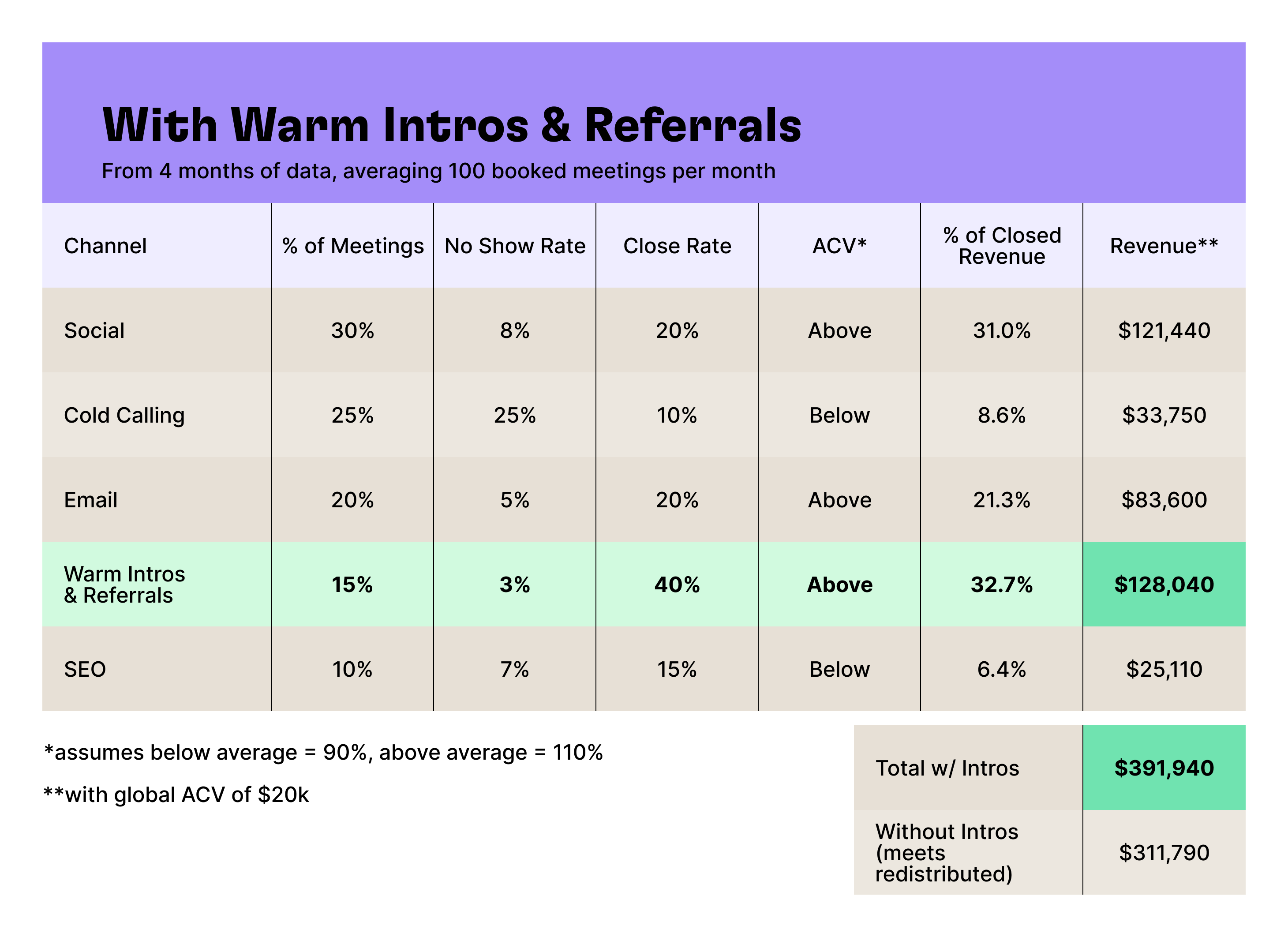
But as we move across the table and follow the funnel, the story changes. Cold calls have an incredibly high (but not unusual) 25% no show rate. That means a full quarter of the meetings booked there never even happened. On the flip side, warm intros have the lowest no show rate, at just 3%.
And it only continues to tell a different story as we keep going. Warm intros have a close rate 2-4x higher than any other channel and close at an above average ACV. When you follow the full funnel, that 15% of meetings ends up representing a full 32.7% of all closed won revenue for this company. Talk about punching above your weight.
At a $20k ACV, let’s assume (generously) that, without intros, this company could still book the same amount of meetings. Redistributing that 15% of meetings across social, cold calling, and email still leaves the company $80,150 short on revenue. A full 25% less than if that 15% of meetings had come through their network.
Same number of meetings. 25% more revenue. Investing in GTN for your revenue strategy doesn’t get much more compelling than that!
Keep reading to learn more about the two halves of a good GTN strategy - Network Creation and Network Activation.
Create a Network Worth Activating
1. The Mindset Shift
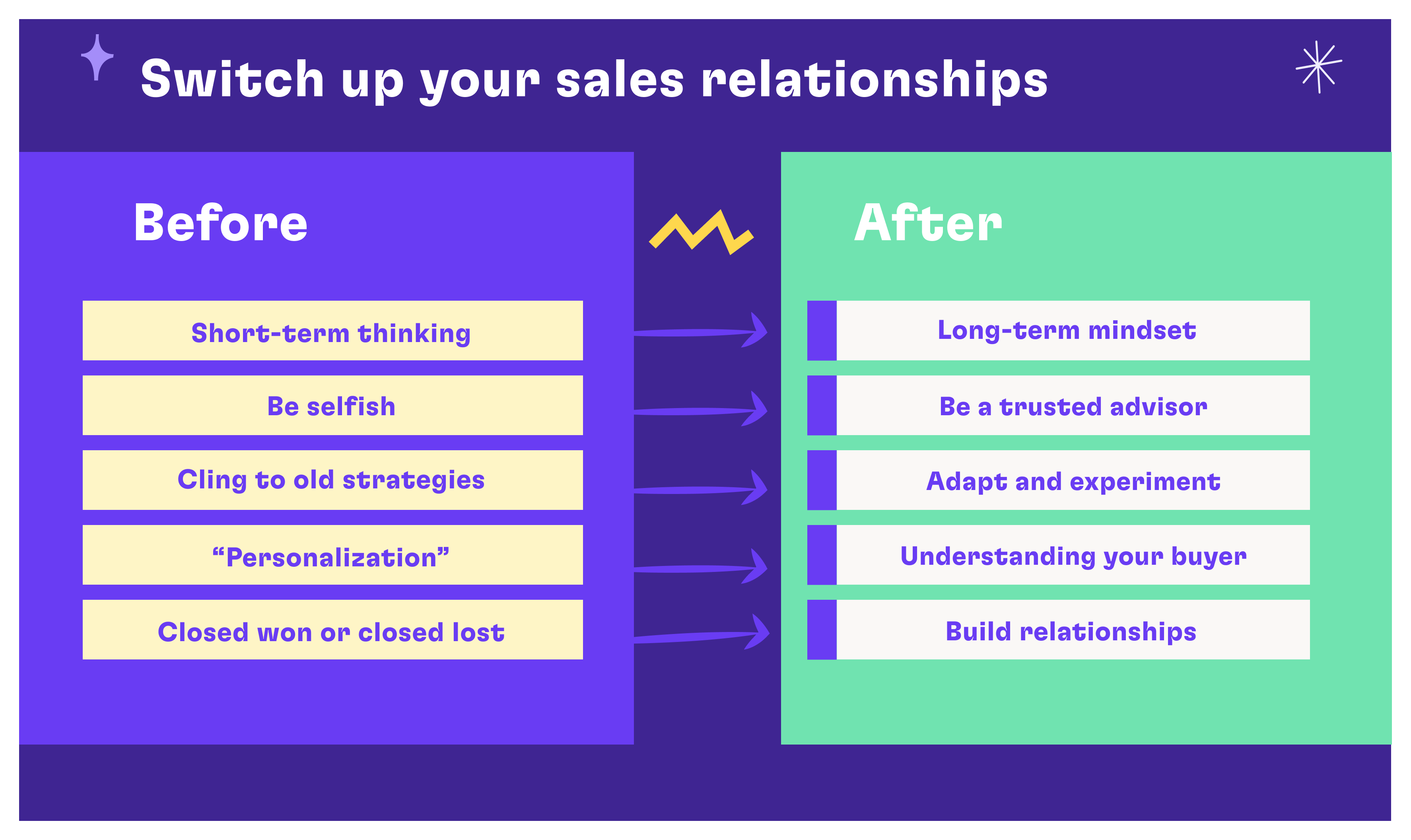
Adopting GTN starts with a mindset shift. Over the last 10+ years most sellers (and sales leaders) have been taught two things that have been damaging over time.
- If you do enough activity, you’ll more often than not hit quota.
- Tools can solve all your problems.
These are not true (nor were they really ever). Activity is of course important, but it’s only one piece of the puzzle in sales success. Ever notice how the best sellers often don’t follow the exact playbook or have the highest activity numbers?
So many sales tools have taught sellers to “push button, get value.” Push button, get a list of enriched data. Push button, start a sequence to 1000 prospects. Push button, dial 10 numbers at once.
Don’t get us wrong, tools have a place (we build and sell a tool ourselves!), but the sellers who truly understand GTN have a different mindset. They understand that selling is a game of relationships and trust. It’s a game that takes ages to build up, but only seconds to destroy. 88% of buyers say they only buy when they view a salesperson as a ‘trusted advisor.’ [SOURCE 4 NDR]
Here are a few ways you can start to shift your mindset.
- Discover the world between closed-lost and closed-won
- Drop the commission breath
- Build real relationships
- Embrace your Network Addressable Market
- Start building a network early
Network Addressable Market
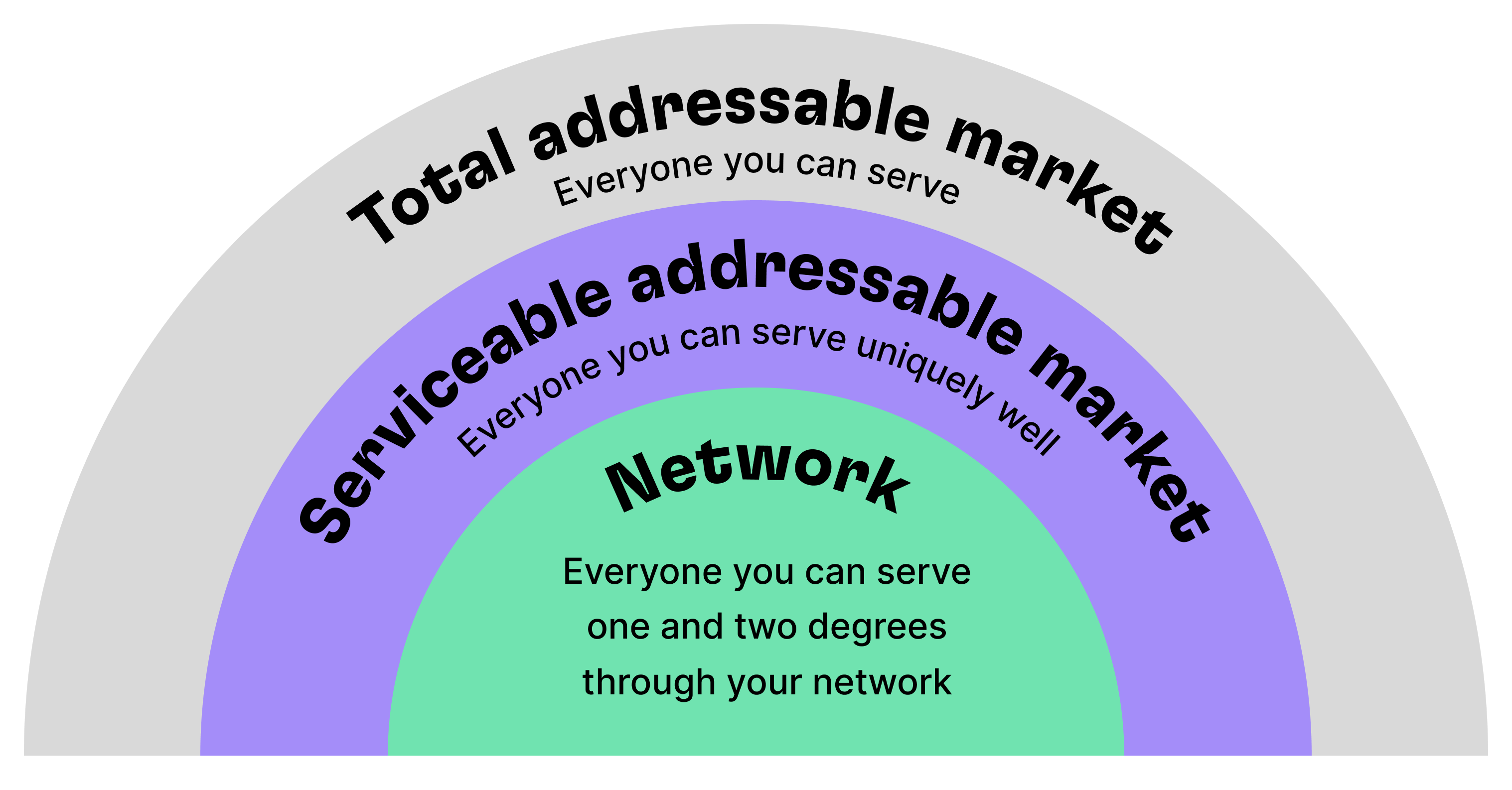
When looking at the marketing and building account lists, many focus on two key groups: Total Addressable Market (TAM) and Serviceable Addressable Market (SAM).
There’s a third to consider though - your Network Addressable Market (NAM). NAM is the subset of your SAM that's already connected to your network through first- and second-degree relationships. While your NAM is likely significantly smaller, it represents your most accessible opportunities for new business.
Rather than just pursing cold outreach across your entire SAM, prioritize your NAM. This approach allows you to:
- Leverage warm introductions and existing relationships
- Build credibility through referrals and testimonials
- Create a larger network, growing your NAM and creating a self reinforcing growth loop
And once you’ve done that, consider how you can increase your NAM through more network creation actions.
“Go-to-Network should be used as a way to prioritize and segment target accounts, as well as an outreach medium. Accounts should be stack-ranked by their reachability so warm introduction opportunities rise to the top.”
Scott Martinis - Founder and CEO at B2B Catalyst
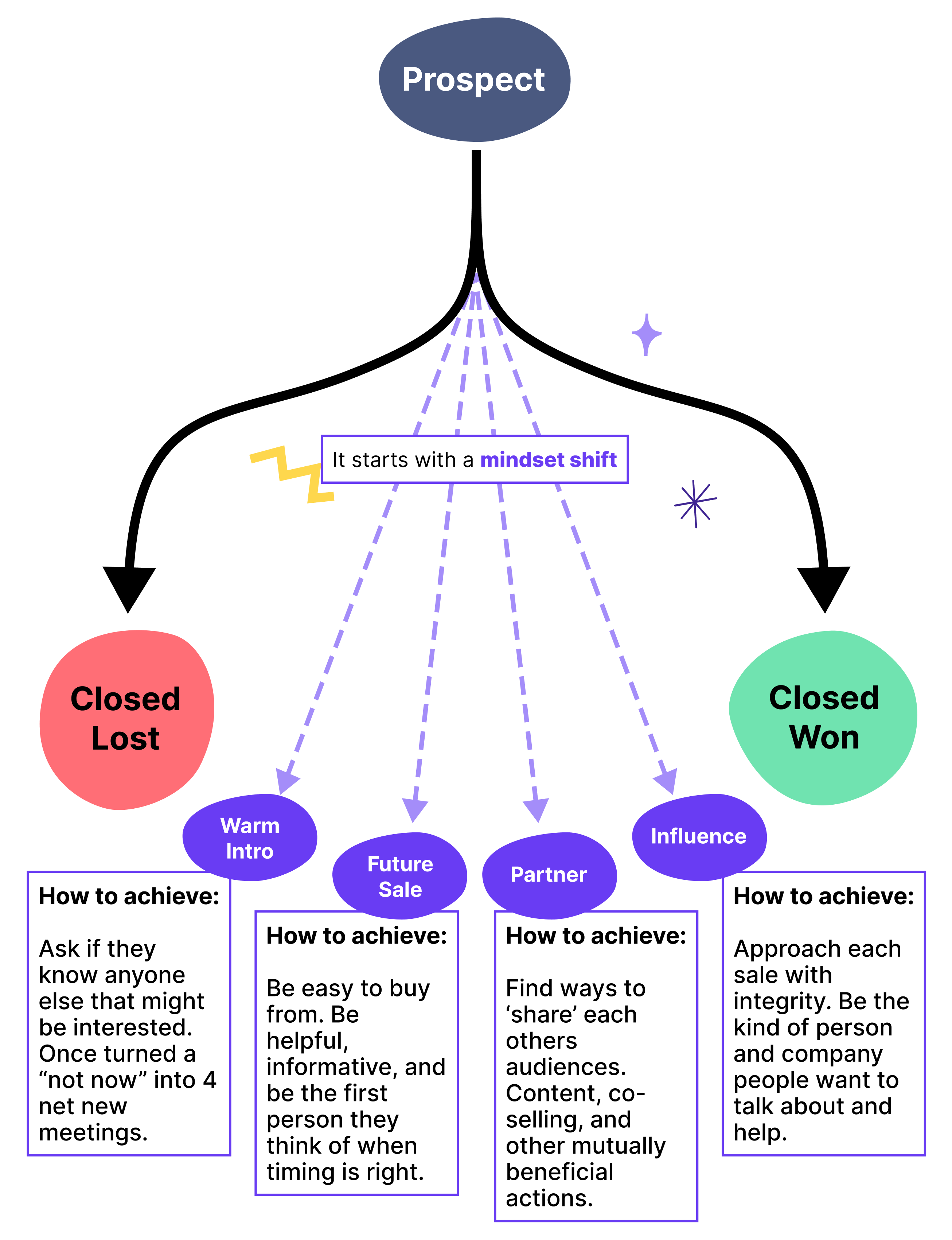
There’s a world of opportunity between closed-lost and closed-won
Stop operating on binary outcomes. Yes, your goal is to sell, but not everyone will buy right now. The best way to be top of mind when they are ready to buy is to find something between closed-won and closed-lost. We’ve seen sellers turn a “not right now” into 4 net-new meetings just by asking “Do you know anyone else that would find this interesting?” at the end of a discovery call.
Always go warm if you can
Just because cold outbound is tried and true doesn’t mean it’s the best method available. Experienced sales leaders often have enormous mindset blocks when it comes to Go-to-Network, simply because they’re proud of their ability to handle rejection and hustle harder than other sellers.And that’s great. We respect that. But don’t let an obsession with hard work keep your team from experiencing warmer, faster deals. Why go cold when you could go warm?
Try new things before you get commission breath
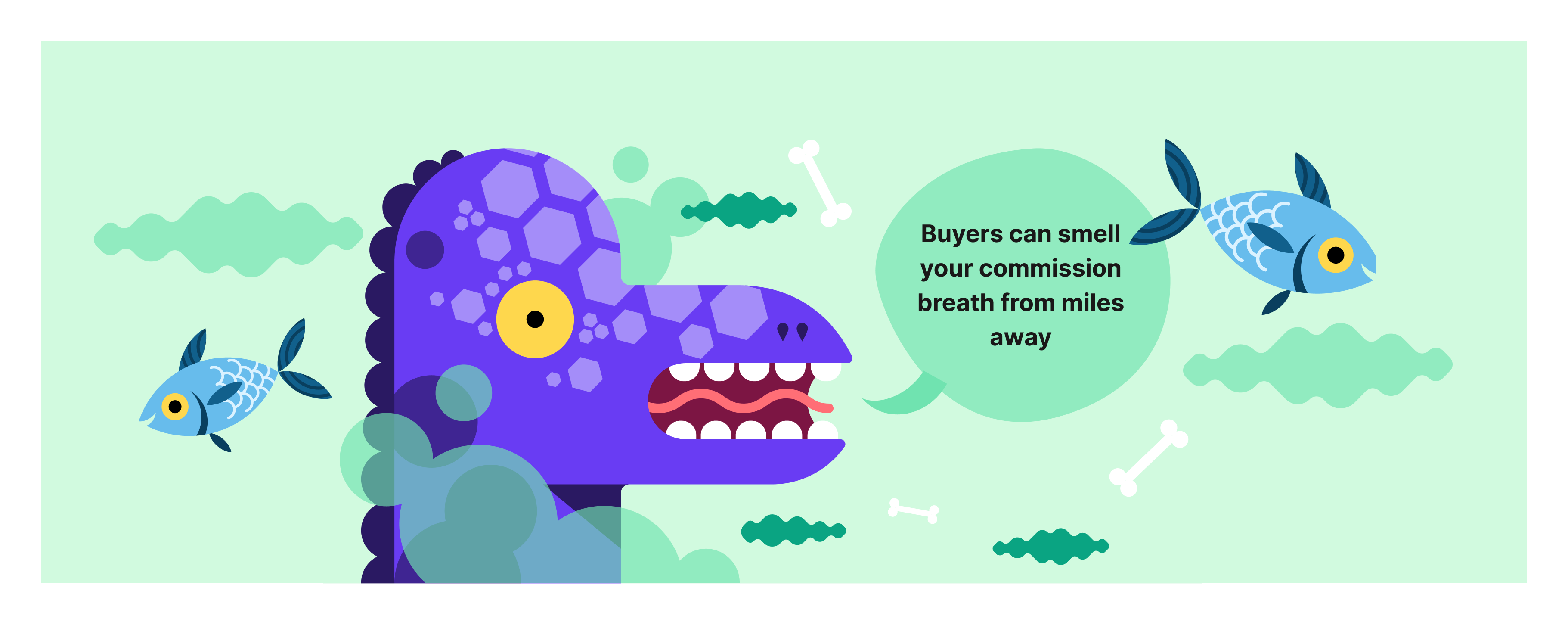
Commission breath is an invisible smell of desperation and pushiness that buyers can sense from a seller. Not everyone will buy from you, and that’s ok. Treat each buyer with respect, and remember that only they can decide when they buy.
Don’t let your desperation for commission get in the way of being a decent human being when selling.
People buy from people they trust
Fair or not, the old saying “it’s not what you know, it’s who you know” is often true, especially with enterprise deals. Buyers buy from people they trust, and its a hell of a lot easier to be trusted if you’re already known. Being known can come from your own connection with a buyer, or from leveraging a mutual connection through an investor, customer, executive, or partner.
Don’t assume you can’t use GTN because you’re too green
Often we hear from sellers and sales leaders that they can’t adopt a GTN strategy because they personally have no network amongst their target market. They also tell us “I’m just a BDR, who’s going to listen to me?”.
Get rid of the idea that your role dictates the value that you can provide to another human, and instead, start thinking of the value you can provide. Your task is to figure out what tools, content, and data are helpful to your target buyer and offer the right resources in conversations.
Besides, GTN isn’t just about your personal network. It’s a team effort and all about creating and activating the shared network around your business. You’ve probably got investors, advisors, executives, partners, and customers who’s networks you can tap into.
2. Social Selling and Content Creation
Creating content on social media isn’t just for influencers and big names. It’s one of the most powerful tools a seller can use to build authentic connections and awareness with their buyers. The goal (usually) isn’t to go viral or be famous, but to be consistent and connect with your buyers.
As long as you’re willing to show up, you can make social selling work for you. This section focuses on social selling as it relates to LinkedIn, but the learnings here can be applied to other platforms, or even content creation in general.
"We looked at 1041 outbound messages across companies and saw a 3.6x higher reply rate when sellers have at least one authentic organic touch point, post publicly, and reach out in response to relevant activity"
Parthi Loganathan - Founder & CEO at Letterdrop
Start with conversations
LinkedIn can be a goldmine if you use it right, especially if your buyers hang out on there. Some people have the misconception that only salespeople and marketers spend time on the platform, but we know sellers who are crushing it using it to reach out to compliance lawyers, HR leaders, CTOs and every other role you can imagine.
Remember - just because they aren’t posting on LinkedIn, doesn’t mean they aren’t using it. There’s an old rule of thumb for internet forums called the 90-9-1 rule. It states that in online communities, only 1% create, 9% engage, and the remaining 90% only consume.
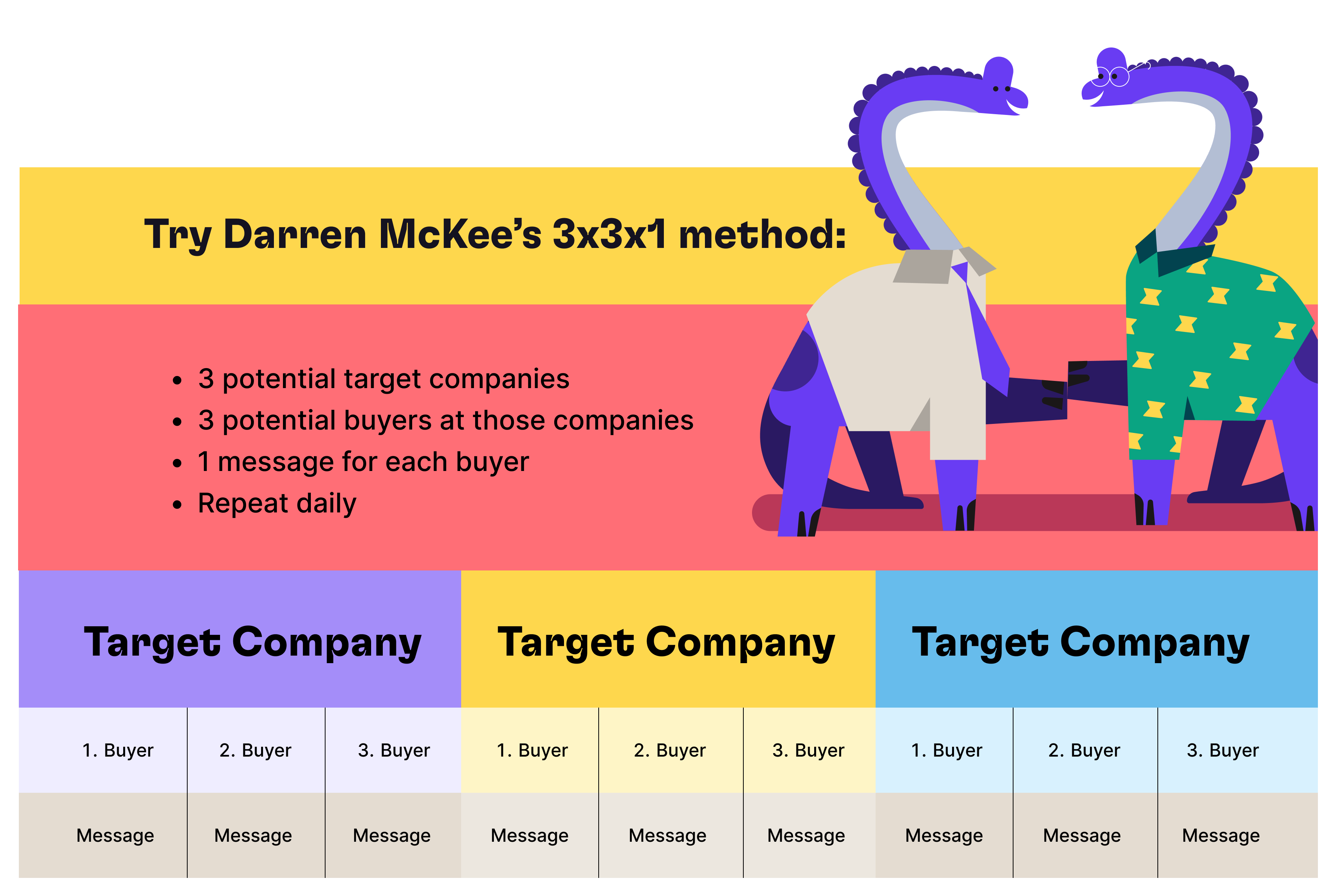
“Even though all prevailing advice is to never pitch slap, I pitch in my first message. I do 10+ minutes of research per account and write a personalized, relevant message for each person, so no matter what’s going on, I send nine highly personalized messages every day. Because of this, my pipeline is always full.”
Darren McKee - Social Selling Coach
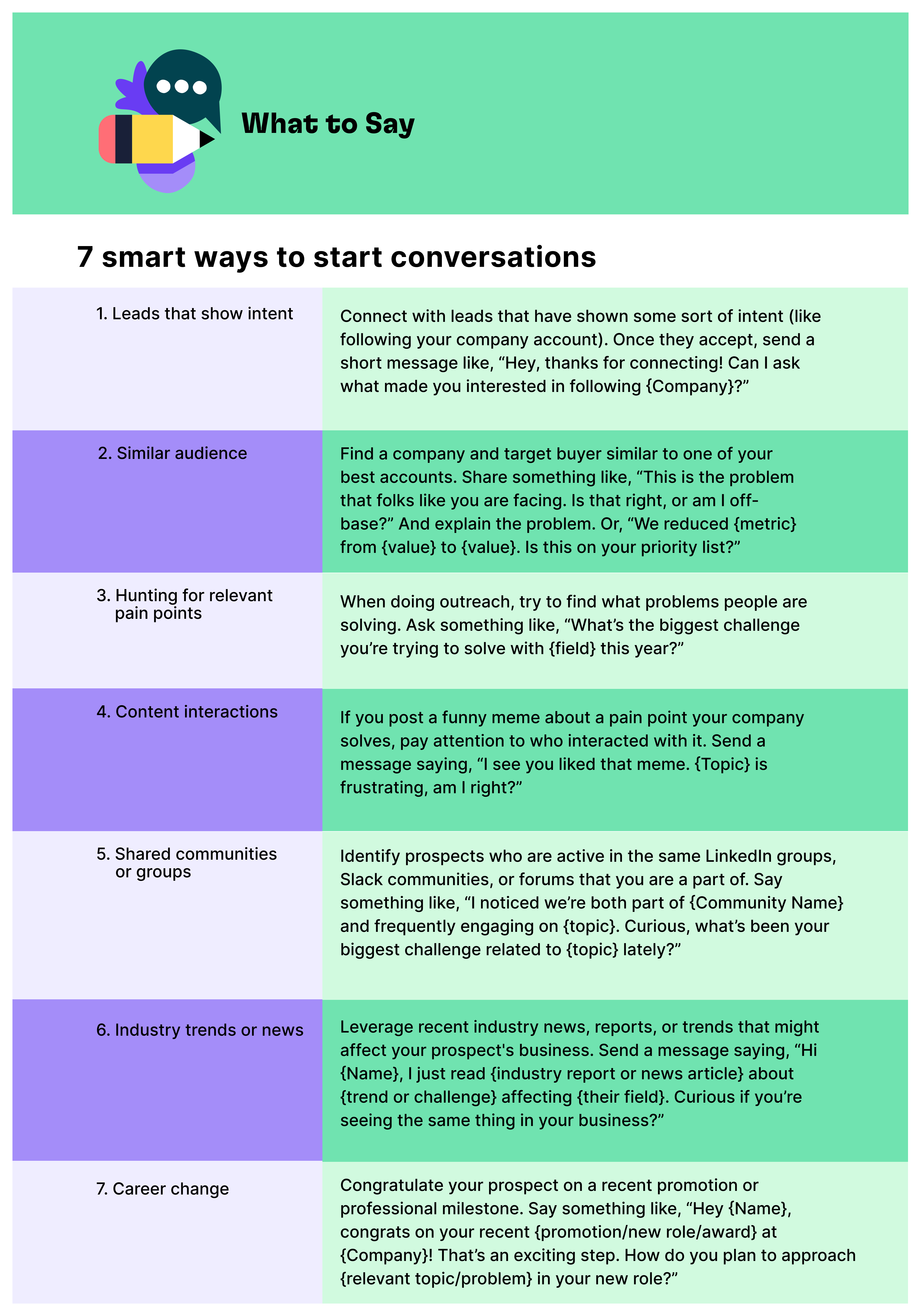
Thanks for reminding us, Bronto! We can all benefit from being a bit more creative and real. Conversations can start with fun interactions, not just serious business talk.
In addition to testing different conversation starters, be sure to test out your formats. Try sending short video messages to your top-priority accounts, and see if you get more responses. Video has a great way of humanizing your message and making it feel more personal.
3 video prospecting tips from our friends at Sendspark
- Keep it short. 30-60 seconds is ideal.
- Be creative. Include a background that’s relevant to your prospect to grab attention. Be yourself!
- You need a hook. The first 5 seconds of your video determine if people will engage. Avoid starting with “Hi, my name is X and I work for X.”
Keep conversations flowing
Using your experience and intuition, offer to hop on a call. Don’t do it too soon, or you’ll come off as inexperienced and desperate. People get countless invitations to sales calls from high-volume, low-quality outreach, so you need to be careful. After they’ve engaged with you and sent a handful of messages, you can shoot your shot and offer a call.
Make sure to keep track of opportunities in your CRM. You might be having over 100 conversations going on at any given time. Only add people to your CRM once they’ve shown intent—either by booking a call or stating that they would like to have a call with you. It’s important not to bog down your CRM prematurely or overestimate your pipeline.
Start with comments
Posting content can be daunting at first, but theres an easy way to start - commenting on other peoples content. Often, a well timed and thought out comment will get more attention than your posts.
Engage with prospects, subject matter experts, and influencers in your space. Just be sure your comments add something to the conversation, rather than just agreeing with the original post. Oh, and people can tell when you’re using AI to do your comments. Be better than that.
An added bonus is that you’ll also find that your comments act as starting points and can often be fleshed out into full posts.
“I personally block out an hour and a half every morning to go through LinkedIn posts and engage. I’m not looking just for content from my first-degree connections, but I’m also searching for specific topics and hashtags. I comment thoughtfully on posts to form relationships with people in the space, showcase that I know what I’m talking about, add value, and learn from other people. Genuinely wanting to learn is a very important aspect.”
Adam Jay - Co-founder and CEO of Revenue Reimagined
Post like nobody’s watching
Sometimes, sellers are afraid of showing up on LinkedIn. Fear of failure, imposter syndrome, and social media shyness can strike at any time. But here’s the deal, if nobody likes or comments on your posts, they won’t be seen by very many people. Slowly, you’ll start to learn which posts perform well, and your best content will be seen by more people. You gotta start somewhere.
Not sure what to start writing about? Put your ICP first. What can you post that will be interesting, helpful, or relatable to your target buyers? If you can answer that, then you’ve got a treasure trove of things to write about.
In general you can think in three categories - memes, thought leadership, and product content.
Below is a list of 15 content ideas for salespeople from our friends at Aware. Use it as a starting point for creating content and then go from there.
15 LinkedIn post ideas for salespeople from our friends at Aware:
- Post a photo of you and your team and customers at an event together (social proof)
- "Here's how to X" (something your ICP wants to be able to do better)
- Reflect on a life or career milestone, and include a picture
- "X isn't dead. But Z needs to change." Break down a common tactic in your field
- Share a .gif or video showcasing a new product feature and why it'll help your ICP
- Address a current trend in your market, but provide a nuanced (not black-and-white) take
- "Here's how we [generated XYZ result] for [ABC client]", then tell a brief case study
- Talk about why all of your competitors built a feature one way, but why your company didn't
- "[TITLE]s: there's a lot of conflicting advice about [TOPIC]. Let me dispel some misconceptions:"
- Highlight a SaaS partner, implementation consultant, or customer
- "I spent Z]hours creating [X]. And I’m giving it away." Then share a .gif of you scrolling through it
- "What worked in [past year, e.g. 2019] won’t work now" with a trend that needs to go away
- Educational carousel in your brand colors, simplifying a complex topic
- Share an anonymized quote from a discovery call with a prospect, then discuss the solution
- Original research: "We analyzed [first party data], and found [incredible insight]
Leverage what you already have
You’re sitting on a treasure trove of content ideas and you don’t even realize it - calls with prospects and customers. What better place to find ideas to write about that will resonate with your buyers than conversations with your buyers?
“Not sure what to write about? I often use AI (Claude) to find topic and post ideas from my customer call transcripts. I DO NOT use it to write posts for me, just to help pull out ideas or patterns from calls I might have missed. This helps make sure I’m writing content that is relevant to my prospects and target market.”
Mac Reddin - Founder & El Rey de Dinos @ Commsor
Mix engagement-focused posts with lead drivers
Unless you’re Mark Benioff, no one is going to care what you have to say if you only share sales content about your product. Your content shouldn’t be a constant billboard. It’s called a “personal brand” for a reason.
At the same time, don’t chase likes. The content that sells will often not be your best performing content. You gotta mix it up and give people a reason to care about what you have to say.
“Product marketing posts bring in more demand. They are not that popular, but the people who interact with them are typically our perfect customers. My content and subsequent interactions serve as the warm intro.”
Laura Erdem - Sales Manager at Dreamdata
Make it easy with memes
You’re likely not selling to other sales people, so it’s going to be hard to be perceived as an expert by your target buyers. But what if instead of being seen as an expert you’re seen as relatable through your understanding?
Memes can be a universal language that show your buyers you understand them. Posting things they’ll relate to and find amusing can sometimes build relationships better than the thought leader approach. Especially if the latter is obviously forced.
“My content is very approachable, with lots of humor and sarcasm. I’m all about memes. I don’t try to write smart posts that are going to intimidate people. My goal is to talk to someone. I want them to feel like we met at an airport and are sharing a beer. What are you up to? Where are you flying? That’s the kind of vibe I put out with my content so I can help people feel comfortable when they talk to me on the phone. Low pressure and no big expectations.”
Roy Schuhmacher - Enterprise Sales Manager at HireVue
3. Leveraging Events
Trade shows, private dinners, and industry events can all be


