


Go-to-Network for Marketers
What is Go-to-Network?
Go-to-Network (GTN) is a strategic approach and model where a business activates their networks including investors, communities, partners, customers, etc., to drive growth.
While traditional Go-to-Market strategies focus on direct channels and a linear funnel, GTN focuses on network creation and pulling the market into your sphere of influence.
The increasing complexity and cost of outbound, paired with the reduced effectiveness of it makes GTN an effective strategy for companies to embrace.
Executing on Go-to-Network requires investing in two halves: network creation, activities that bring buyers into your sphere of influence; and network activation, how you turn those networks into business value.
About this resource
Marketers, did you know you have an untapped source of pipeline in the networks around your business? That's why we created this guide—to help you transform those networks into revenue!
In this guide, you will learn how real marketers are creatively filling their funnels by building relationships with fans, customers, advisors, investors, partners, community members, and employees.
You will be joined by our mascot, Bronto Benny, who is also on a journey to becoming a Go-to-Network marketer as he runs his lemonade business! He will pop in occasionally to ask some helpful questions and guide you as you read through the playbook.
Our hope in creating this resource is that you are able to create warm, sustainable revenue for your organization that compounds through network relationships.
Select a section below to read more. Happy marketing!
1. Why Marketers Need to Add Go-to-Network to Their Strategy
In collaboration with Pete Vomocil and Mark Kilens
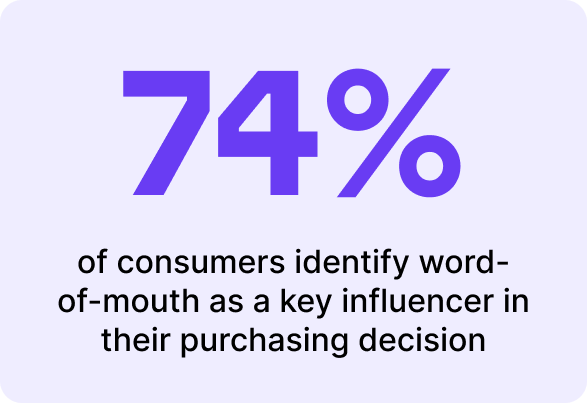
"The cost of renting land from the Facebooks and the Googles of the world is getting more expensive, so blending in an approach where you have familiarity, high conversion rates, and warm introductions certainly helps from an acquisition cost perspective. In a new paradigm where efficiency rules, we need to leverage all the resources that we can."
Josh Norris
Have you felt it?
If you’re reading this, chances are you’ve felt the tectonic shift that has occurred in the B2B industry over the last few years.
Many of us remember the “growth at all costs” mindset where liquidity was plentiful and cheap and waste was high. Now, it has transitioned into a capital-efficient, precision execution, performance-driven machine. For us marketers, this often means you’re expected to drive more revenue with less resources.
Yikes.
Do we answer this shift by simply ramping up our marketing activities? More ads, more campaigns, more case studies, more testimonials, more webinars? If so, we eventually need to ask, does volume bring a solution or is it simply part of the problem?
Our answer to this movement is different. Radically different.
Our answer is rooted in the ability to leverage trust and reputation to achieve results, and, surprise—it’s been right under your nose this entire time!
"The cost of renting land from the Facebooks and the Googles of the world is getting more expensive, so blending in an approach where you have familiarity, high conversion rates, and warm introductions certainly helps from an acquisition cost perspective. In a new paradigm where efficiency rules, we need to leverage all the resources that we can."
Josh Norris
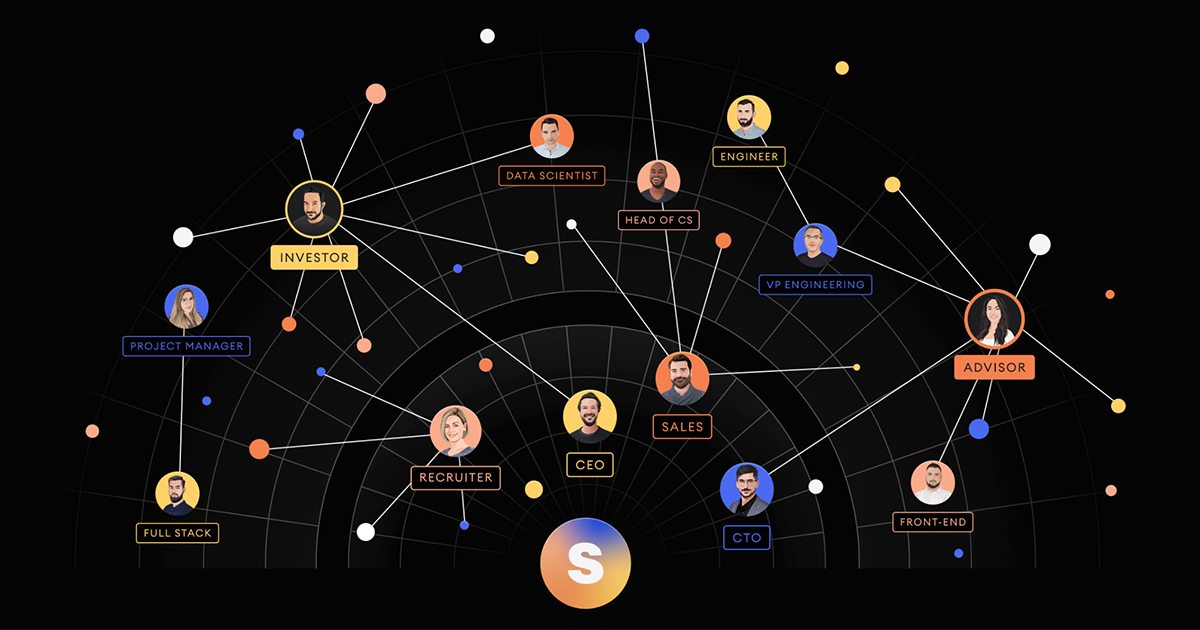
In this guide, we posit that the networks around you are your greatest source of untapped pipeline. Your business is surrounded by them. Networks of advisors, investors, employees, customers, influencers, partners, and so on—networks full of people who have either built relationships with your potential customers or, even better, are themselves your potential customers.
Instead of starting from scratch every time you go to market, consider building upon the trust your networks have already established with your buyers.
The Go-to-Network approach harnesses existing trust and relationship equity, helping you source more leads, drive more pipeline, and create a stronger brand.
Let’s get started.
2. Understanding and Identifying Networks and People
In collaboration with Pete Vomocil and Mark Kilens
One note before we get started:
Implementing a Go-to-Network approach may seem daunting at first. But you can rest assured that a Go-to-Network approach doesn’t require you to overhaul every process you’ve already built.
What it does require, however, is a mindset change. As you engage in your normal Go-to-Market tasks and activities, start to ask yourself how and where you can involve the people in your networks to influence outcomes.
If you are working in a customer marketing capacity, could you ask a strong customer to record a live case study? If you’re working on building pipeline, find out who has networks that are closely associated with your ICP.
Here are the most common networks that surround a business:
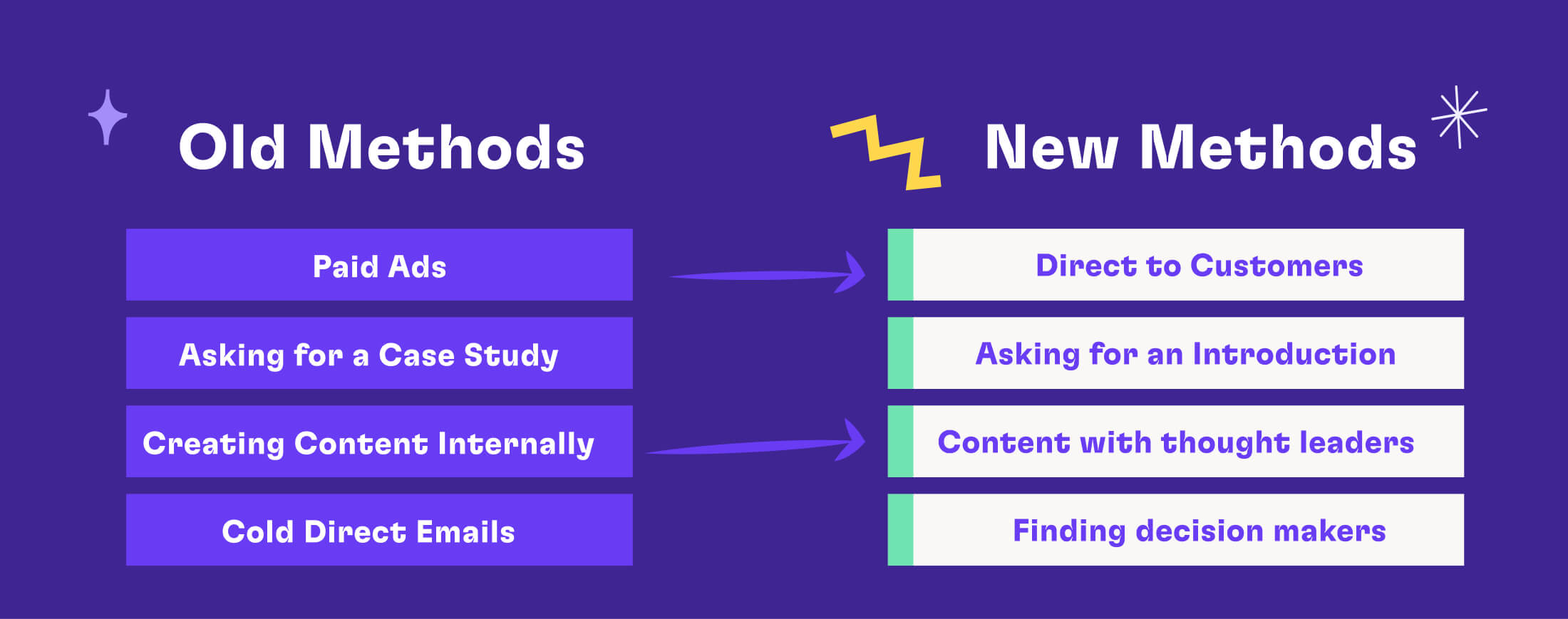
Figure out who you’re trying to reach or what you are trying to accomplish, and immediately think about which network around your business can support those efforts. What type of network does the task require? Next, who in that network can support this outcome?

That’s a great question, Bronto Benny!
Here are the most common networks that surround a business:
- Customers
- Partners
- Advisors
- Investors
- Community Members
- Employees
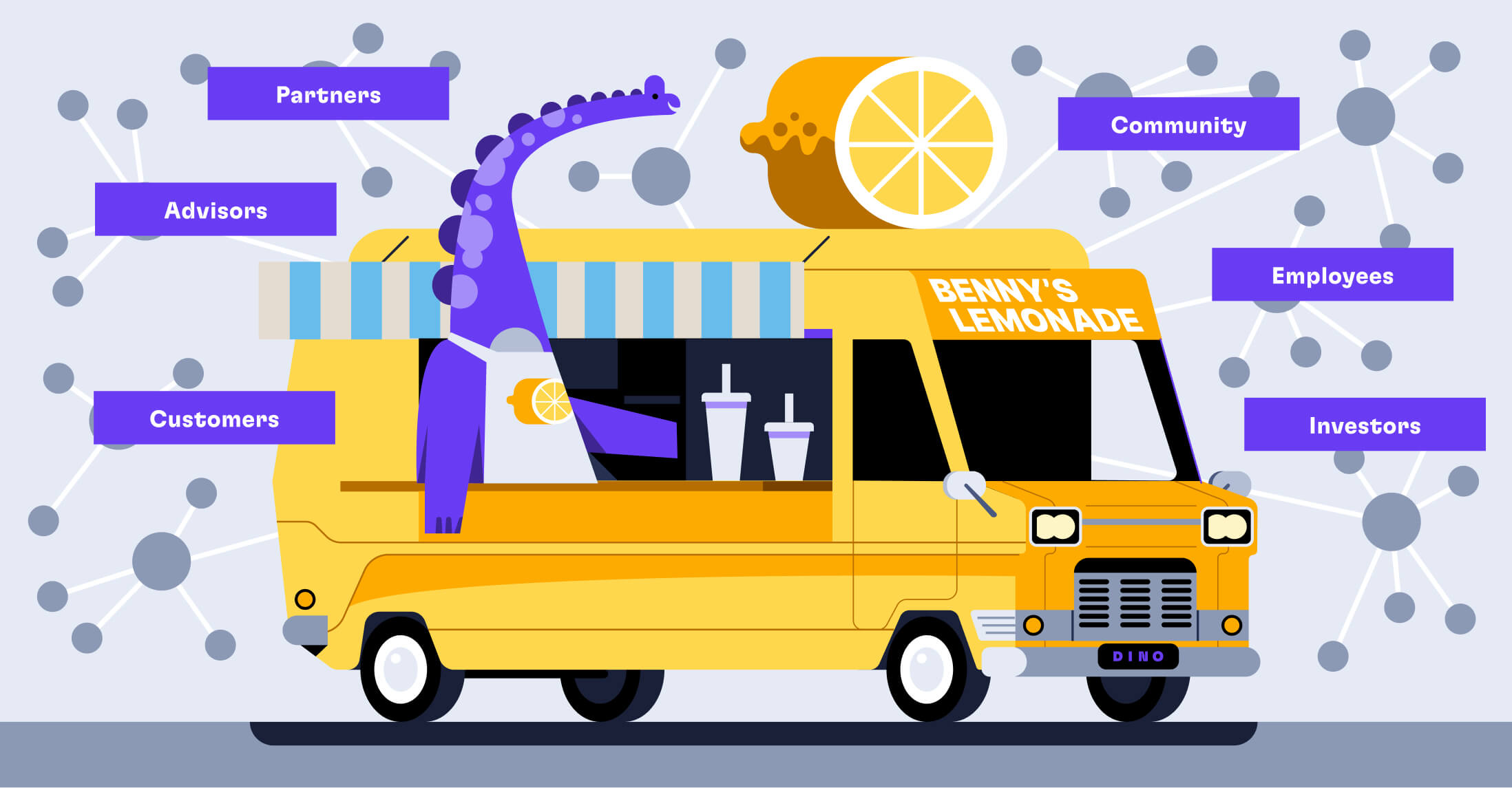
While each of these networks share a common investment in your business’ success, they are all unique in the purpose they serve.
To get started, let’s categorize these networks into three categories:
Networks to attract people
These types of networks are vital for top of funnel marketing activities designed to bring people into your funnel. Partner, advisor, and employee networks are great ones to leverage for this job.
Activity examples:
- Collaborate alongside partners to create content that reaches their audience
- Make space for employees to build personal brands that can expand your reach
Networks to engage people
You’ve attracted people, now you need to keep them engaged! Typical networks you can tap into to keep people engaged include customers, community, newsletter subscribers, and employees.
Activity examples:
- Write a go-to industry newsletter to keep your audience engaged and learning alongside your brand
- Build a community for professionals to connect with others and grow their own personal networks
Networks to close business
Remember your north star is driving revenue! That means after you’ve attracted and engaged people, closing business should be a priority. Typical networks you can tap for this effort include investors, partners, customers, and employees.
Activity examples:
- Connect skeptical buyers with satisfied customers to build trust and assure them of your product
- Ask your strongest customers for a referral to someone they know!
3. Sourcing Leads from Rented and Owned Networks
In collaboration with Joshua Bailey and Christina Le
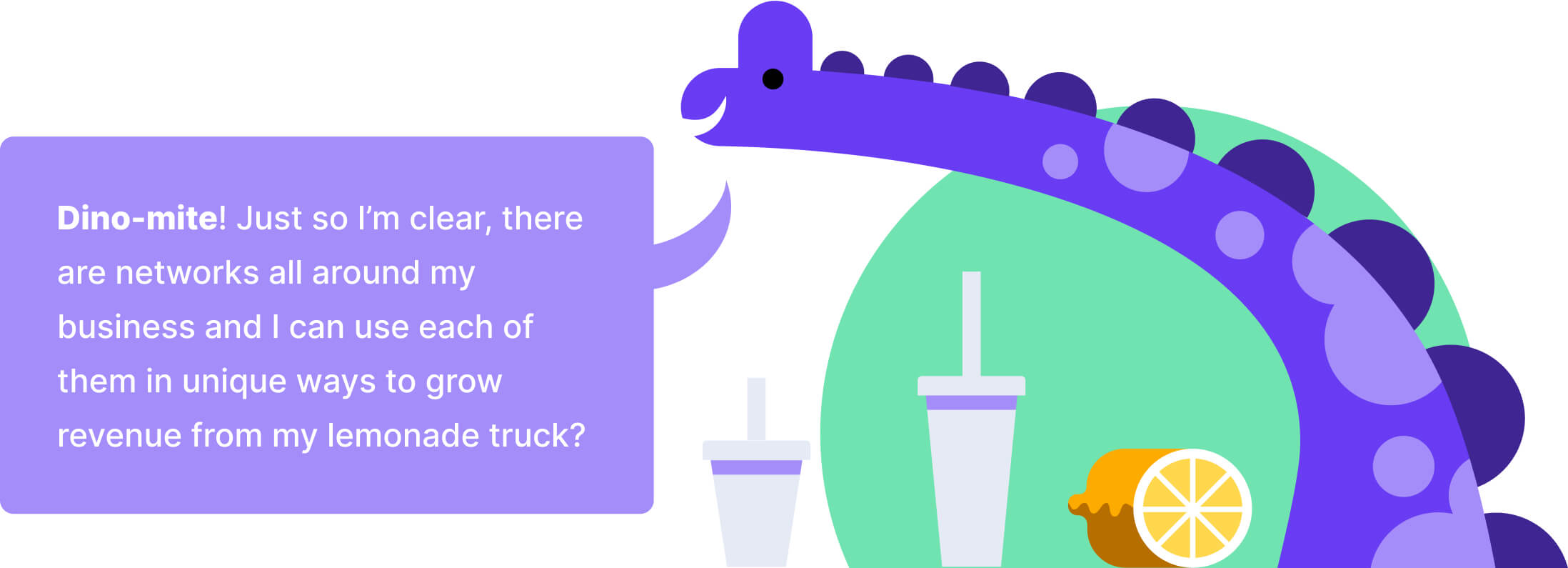
That’s exactly right, Bronto Benny! Just like we discussed in the previous section, your networks can be used to attract people, engage people, and close business.
Let’s discuss rented networks and owned networks - what they have in common, how they’re different, and ultimately, how they help you drive revenue in a non-transactional, community-led manner!
Rented Networks
Rented Networks are any platform or network of people that the company does not own, but can temporarily use to reach its audience.
Over the years, social media has moved away from being the low-level marketing function we hand off to the most junior employee. Today, it is an integral part of a brand’s marketing motion.
A strategic social media presence impacts buyers throughout the entire marketing funnel, from raising awareness and educating them, to helping close new business. Beehiiv, Plot, and Semrush are great examples of companies that do this well.
Christina Le, Head of Marketing at Plot, breaks down her approach into three key principles:
Social media is not just about getting attention.
- Lean into the communities around you. Consider the sellers in your own organization. Do any of them have an online presence or following that is relatable to what your brand offers? Use these communities to your advantage to enhance relatability and trust in your brand.
- As social media marketers, we can often be too preoccupied with brand awareness and attention. Use social media as a tool to create business impact by showing how your product solves real problems. The people who engage on business-impact content are often much warmer leads.
- Share the story of your brand. Involve your audience in the development of your product. Create emotional connections and build trust through genuine relationships with people. Listen well and build what the community needs. This strengthens engagement and, ultimately, loyalty.
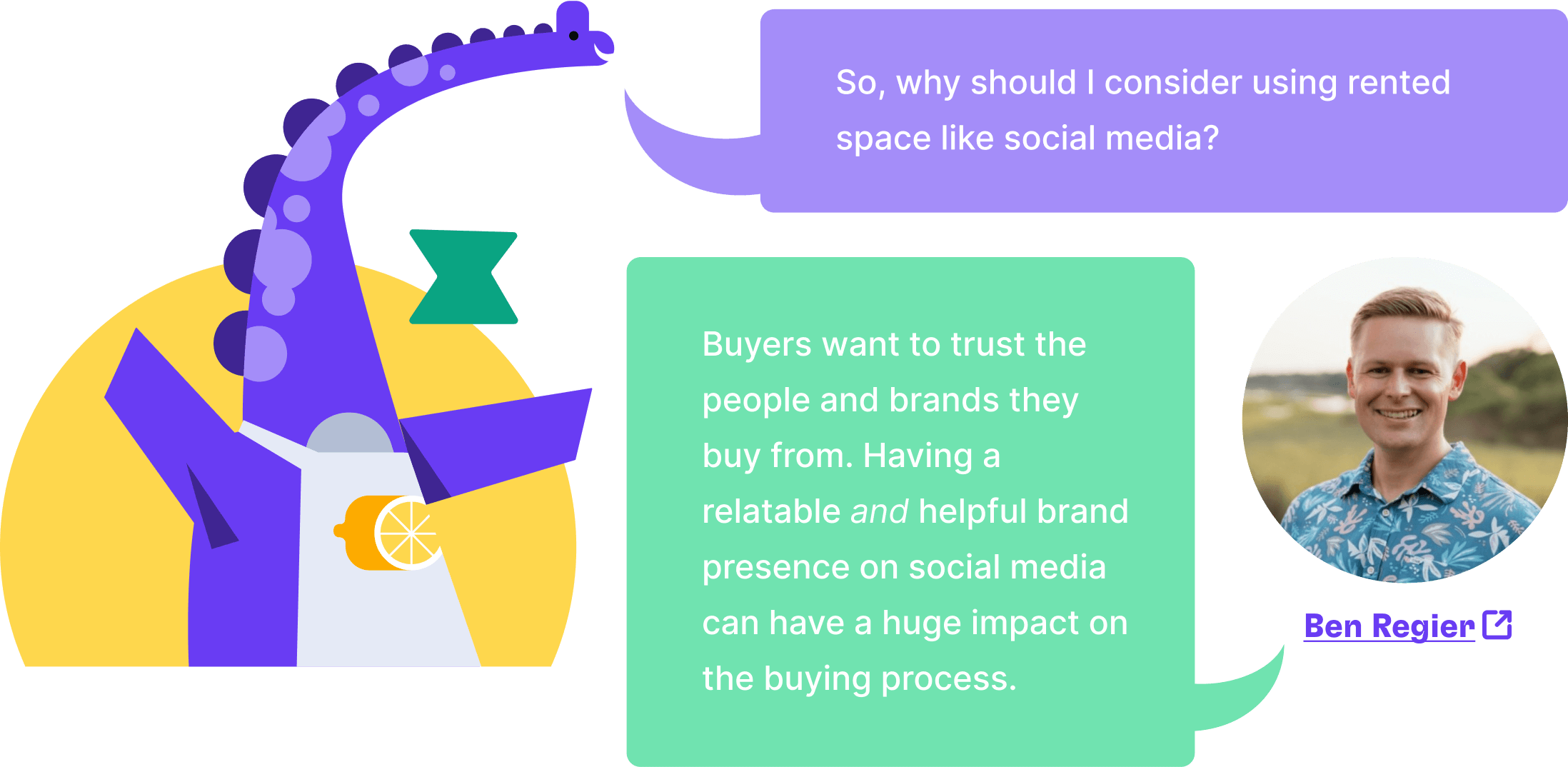
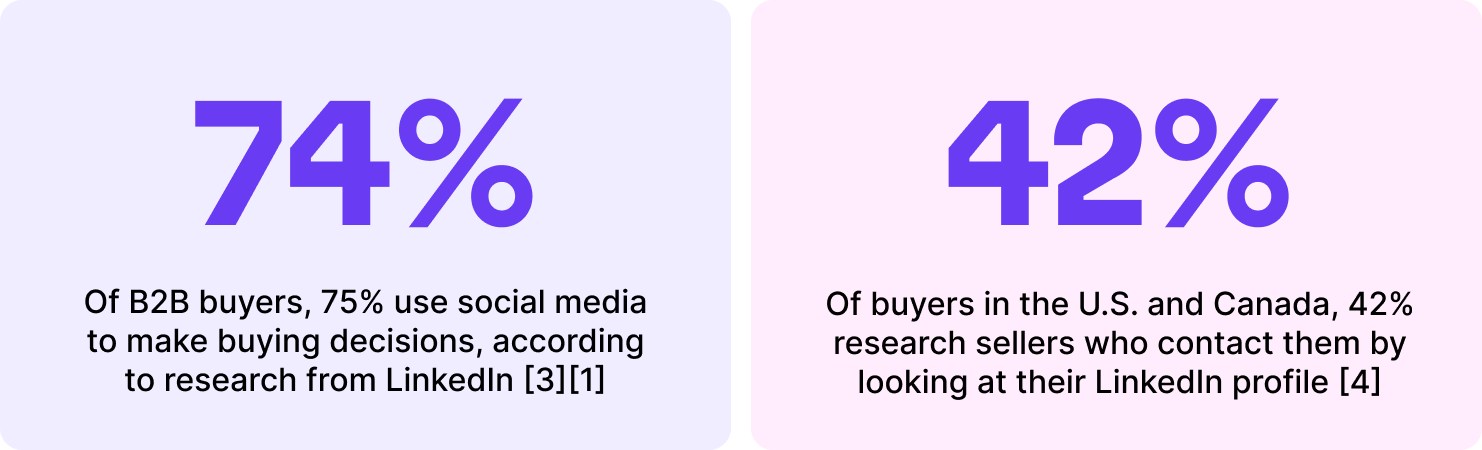
Here are some best practices and activities you can start doing today to drive warm, sustainable revenue through rented spaces like social media:
Engage quickly and engage often. In sales there’s a phrase called speed-to-lead that describes how quickly a seller responds to a hot lead that either comes inbound or responds to outreach. If you’re a social media marketer, have the same speed-to-lead mindset. The bar is extremely low for how brands engage with their audiences. When a brand engages back with someone in mere seconds, your prospects notice and helps them feel noticed!
Consistency in tone. Consider your brand’s tone across all communication channels. Is it consistent from LinkedIn to how you communicate in sales emails? Does your brand tone resonate with your target audience? If it resonates, it will be more engaging and memorable.
Collaboration between departments. As a social media marketer, you need to be able to collaborate across all departments. Be able to have conversations with individual contributors and executives alike. Whether it’s about brand consistency or collaborating on a particular sales deal, your ability to be a connector will help you reach your north star of driving warm, sustainable revenue.
Casual vs. corporate branding. Consider how your brand communicates with its audience. Using a casual tone as if you’re speaking with a friend can break down barriers and present your brand as a more personable figure. If your audience doesn’t take to the informal tone, Christina suggests leaning all the way into a unique, corporate voice.
What does success look like? For Christina, success is when prospects book demos from a positive interaction and not because of a transactional, impersonal experience.
Final thoughts. To drive warm revenue from rented spaces like social media, you need to be building and maintaining trust with your audience. Find ways to make your brand personable through having fun, engaging quickly, and engaging often.
Owned Networks
Owned Networks, on the other hand, are any space where a brand has control over the platform and the community, like Salesforce’s Trailblazer community, the Atlassian community, and even Commsor’s own community for GTM professionals, The Herd!

Creating owned spaces like online communities are vital to creating warm, sustainable revenue. These spaces are where your brand has the opportunity to build trust and create value for the networks around your business before you ever ask for anything of them.
When done well, your company’s community can serve as a moat around your business. If you build a community that establishes itself as the central spot for knowledge, conversation, and relationships, your business becomes extremely difficult to replicate! You can copy software and ideas, but you can’t copy relationships.
Joshua Bailey, VP of Community at Saleboat, breaks down his approach to creating revenue through community:
Creating a value-driven community. Be the platform that serves as a hub for resources and knowledge that is tailored to your ICP. Provide helpful resources that your ICP can keep coming back to for different jobs they’re already doing. Remember, people buy from those they trust, and learning and education is a vital way to build trust. Your buyers already have plenty of places to talk with their peers. If you build a space that provides value and conversation, you’ll have a winning combination!
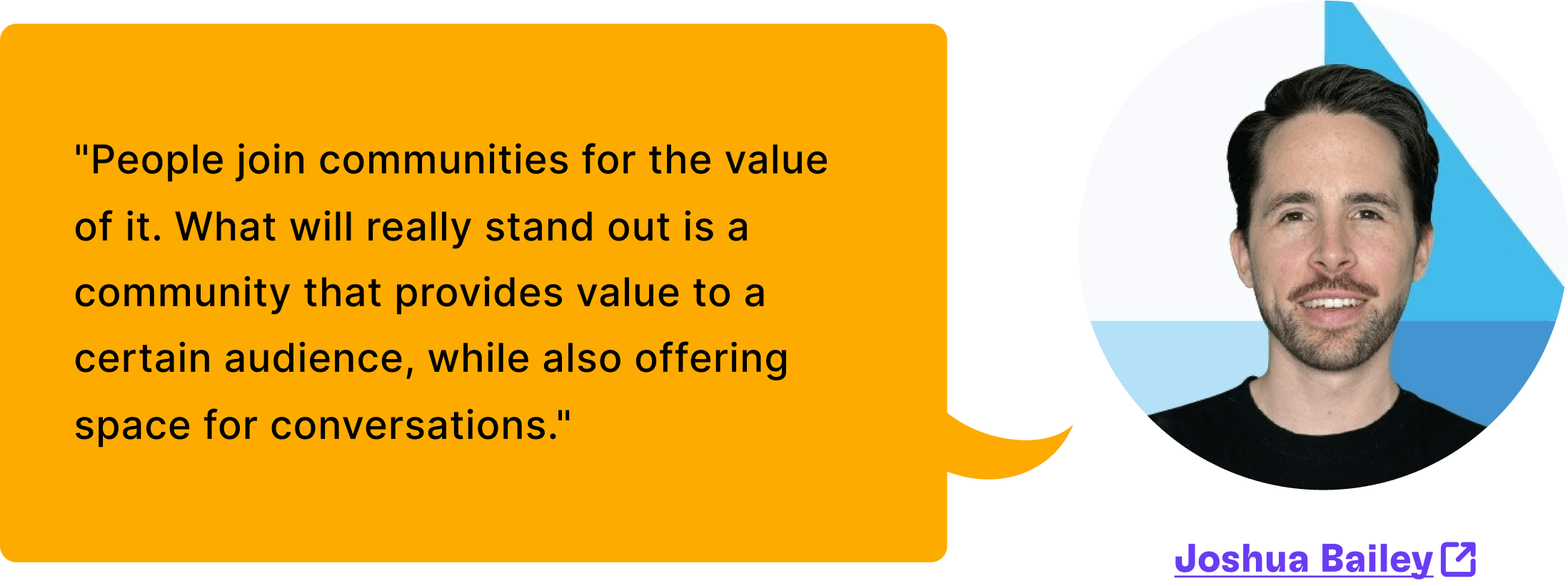
Building an engaging community. Reciprocity is paramount. Engage with members by offering help, responding to questions, and sharing resources. Let’s be candid: if your main goal is to squeeze revenue from the community, you should avoid building the community in the first place. Your community is a space for learning and relationships! Selling irresponsibly and erratically in a community will destroy the trust you’ve worked so hard to build in a matter of no time.
Keep track of interests, goals, and ideas that people share in common, and then find ways to connect them with others in the community! Identify your superusers and leverage their expertise to create content, start conversations, and keep others engaged. “It’s about engaging in a regular conversation like you would in person, not acting like a template,” Josh remarks.
Driving revenue through the community. Create deeper relationships and build members’ networks by finding ways to collaborate. These relationships often result in people asking how they can help you. As a marketer who is responsible for capturing leads, it may be tempting to ask for a meeting at that moment, but it’s important to think beyond the short-term revenue opportunity. Consider asking the person if they know anyone who is looking for the solution you offer. It strengthens each party’s network, can result in revenue, and preserves your relationship with that community member.
As a marketer, you are responsible for capturing leads. It may feel like you’re not doing your job well when building a community because it doesn’t always return immediate financial value. But remember, if you’re building a sustainable community, you’re building the foundation for future revenue in the years to come. As for the short term, remember that people are curious and they’ll eventually want to see what your company does, perhaps opening an opportunity sooner than you expected.
“The cost of renting land from the Facebooks and the Googles of the world is getting more expensive, so blending in an approach where you have familiarity, high conversion rates, and warm introductions certainly helps from an acquisition cost perspective. In a new paradigm where efficiency rules, we need to leverage all the resources that we can.”
Josh Norris
4. Driving Revenue from Partner Networks
In collaboration with Will Taylor
As a Go-to-Network marketer, you are more than just a connector—you are a strategic thinker who can truly understand the partner ecosystem around your business and can uncover where each partner can bring value to your organization (and vice versa).
Not all partners serve the same purpose, however. Just as you tap into different networks for specific goals, you should approach partners in the same way. Some are an awareness play—their association with your brand boosts credibility because they’re already trusted within the industry.
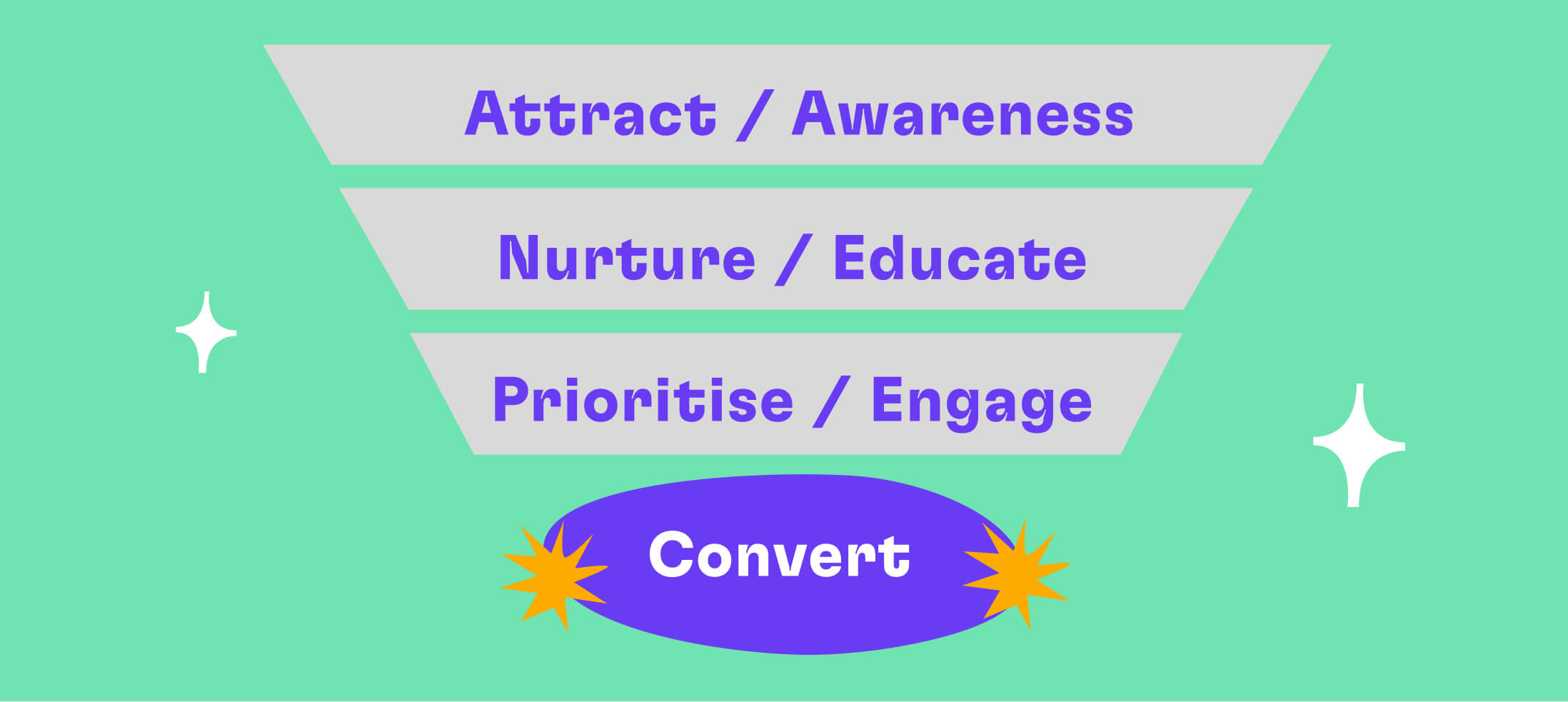
Other partners will help you drive revenue directly, where the combined efforts of both orgs create a "better together" kind of story that ultimately brings more value to the end user.
Finally, there are partners who see your organization as the aspirational brand they want to align with—this is where you can tap into sponsorship dollars.
What sets you as a Go-to-Network marketer apart from the traditional partner marketer is your ability to navigate these nuances and understand how each relationship brings value, and not just to the business but to the customer experience as well.
It’s not just about co-branded campaigns—you are working to build a level of trust that surrounds the customer at every touchpoint.
The scope of a Go-to-Network approach is far more comprehensive than just acquiring new business, but because our north star in this guide is driving sustainable, warm revenue as a marketer, we’ll focus on acquisition through partnerships here, and retaining, expanding, and driving referrals from that new business in a later section.
Here is a simple breakdown of how you should look at partnerships to acquire new, warm revenue as a Go-to-Network marketer:
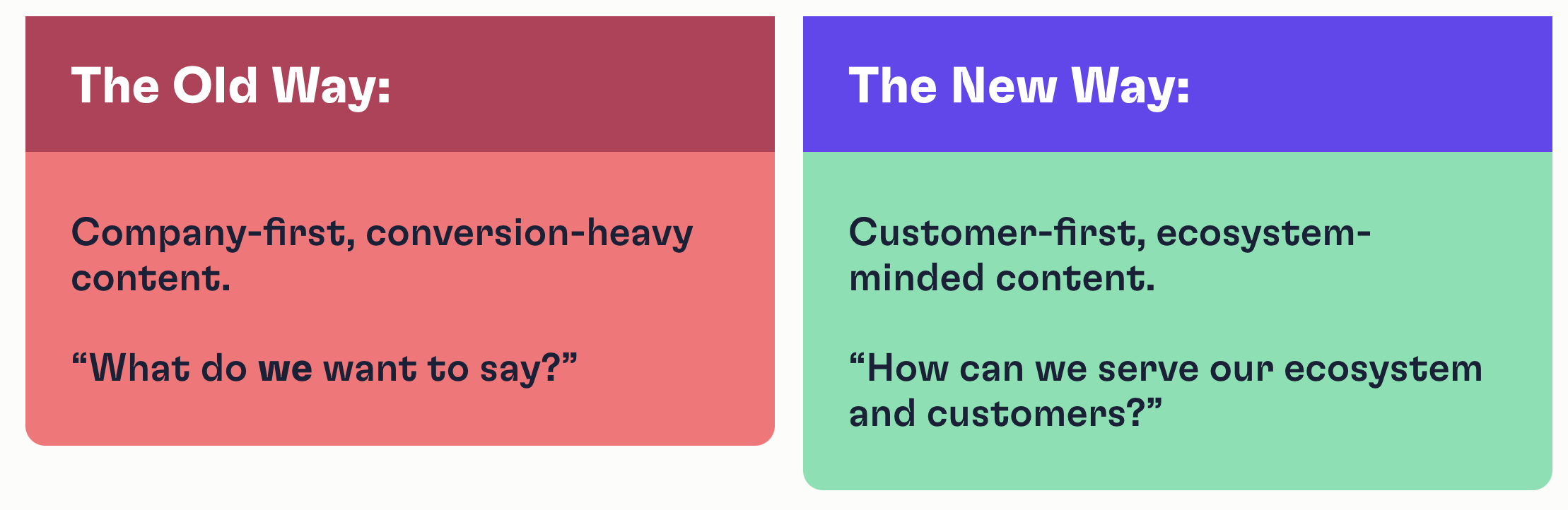
1. Awareness / Attract
To drive greater exposure of your company and solution inside of an existing ecosystem.
How partners help:
- 2x the reach
- Broader expertise creates more value for customers
- Tap into existing trust, the hardest currency to develop in an ecosystem
Which department(s) are most involved:
- Marketing
Partner types:
- Media partners
- Communities
- Influencers
- Key opinion leaders
- Content-level co-marketing tech partners
Why partners are critical to this phase:
- The awareness stage, also known as the “top of funnel,” casts the widest net.
- Buyers become aware of your brand, product, or service with one goal: to learn about the ecosystem.
The Play:
Run a multi-partner event
Set the stage: Figure out which partner(s) you should include based on the topic, target audience, and the information from your overlaps.
Approach your partners with a specific direction (take the lead but leave room for creativity and suggestions):When: General date and timeline.
- What: Topic – what industry trend will you discuss?
- Who: Who you want to include from their team
- How: Format of the content
Divide and conquer based on strengths
- Outline a task list and delegate based on each of your team’s strengths and your partners’ strengths. This should include things like back-end work and promotion. If you’d like, you can implement a few if X, then Y stipulations. For example, if [partner] drives a certain number of clicks, then they get a lead list.
Run the show
- Show up the day of, ready to make the content valuable and entertaining for anyone in the audience. Further mobilize your team by understanding whose accounts are registered. That means specific folks on the sales team to ensure they are actively networking with those who have engaged with the content.
Repurpose content
- Take all of the content you created and find ways to repurpose it into articles, social posts, video clips, and more to drive value to the ecosystem.
2. Educate / Nurture
To nurture potential customers about the problems the market faces that you can uniquely solve.
How partners help:
- Endorse your offering
- Share their trust and influence with people and teams they already work with
- Pair your partner’s industry knowledge with your “net new” learnings to their audience, blending the value and making use of the existing momentum
- Allow you to surround your customers with trusted nodes of influence
Which department(s) are most involved:
- Marketing
Partner types:
- Influencers and practitioners
- Key opinion leaders
- Strategic technology and service partners
- Content-level co-marketing tech partners
Why partners are critical to this phase:
- The education stage of the buyer’s journey is where they learn about how your solution solves their problems and decide whether or not it will be helpful.

The Play:
Create a co-branded report
Figure out which partner(s) you should include based on the topic, target audience, and the information from your overlaps. Pull collective data and create key benchmarks that point to significant pain points that you and your partner’s joint audience are facing, and how your joint solution can solve them.
Co-create a plan with your partner (take the lead on this project, but leave room for creativity and suggestions):
- When: General date and timeline
- What: What is the value your joint audience will glean from your report?
- Who: What population do you want to survey and why
- How: Format of the report
Divide and conquer based on strengths
- Outline a task list and delegate based on each of your team’s strengths and your partners’ strengths. This should include things like back-end work and promotion.
Engage
To help buyers become solution-aware and solution-ready, leading to conversion.
How partners help:
- Access to critical intelligence
- Can influence purchase decisions
- Make intros with key decision-makers
- Co-sell together
Which department(s) are most involved:
- Marketing
- Sales
- Customer Success
Partner types:
- Independent software vendor (ISV) integration partners
- MSPs and other service partners
- Consultants & agencies
- Strategic alliance partners
Why partners are critical to this phase:
- In the engage stage of the buyers’ journey, buyers are making major decisions about whether or not to purchase your product or service

The Play:
Customer stories
- Work with your partner to find a joint customer that aligns with the target audience and best tells your better-together story.
- Co-create a list of interview questions for the customer that keeps the conversation focused on the story you want to tell. However, remember to stay open to the things the customer is most excited about; this is how you discover unique use cases in your product.
- You, the partner, and the customer conduct a recorded inter


