


Help, My Pipeline Is Drying Up!
Not in the mood to read? Watch the video above!
Customer connection is your competitive edge. In a world where customers have more options than ever, the brands that win are those that build genuine, lasting relationships. Why? Because real connections lead to loyalty, and loyalty fuels growth. When you understand what your customers care about and make them feel seen, heard, and valued, they don’t just stick around—they become advocates for your brand.
But building these meaningful connections isn’t about sending generic emails or automating every interaction. It takes intention, consistency, and a customer-first mindset woven into every aspect of your business. This guide breaks down seven practical, no-nonsense strategies to help you forge deeper connections with your customers—from learning their values to personalizing communication to leveraging your networks. Whether you’re a startup or an enterprise, these approaches will help you build trust, boost loyalty, and drive revenue.
Ready to level up your customer connections? Let’s dive in.
What is customer connection?
Customer connection requires that you build real relationships with real people. These connections take many forms, including personalized conversations, quick responses to concerns, and celebrating customer wins, but they all share a foundation of trust, empathy, and authenticity.
A true customer connection goes beyond a single interaction. It means understanding your customers’ needs, challenges, and goals, and showing them you’re invested in their success. When customers feel heard, valued, and supported, they don’t just buy your product, but they also believe in your brand.
The impact of customer connection on business
Connecting with customers is critical for your bottom line. Strong connections build trust and loyalty, which in turn drive higher retention and more consistent revenue. When customers feel truly connected to your brand, they stick around longer, spend more, and are more forgiving when things occasionally go wrong.
Stats that show why truly connecting with customers is important:
- A 5% increase in customer retention can boost profits by 25% to 95%.
- Existing customers spend 67% more than new customers and 50% more likely to try your new products and services.
- 65-75% of a company’s revenue comes from retained customers.
- 32% of customers will end a relationship with a company after one bad experience.
Why customer connection can be hard to achieve
Building meaningful customer connections sounds simple, but in practice, it’s anything but. Too often, businesses fall into patterns that unintentionally create distance between them and their customers. Here are some of the most common challenges:
- Over-reliance on automation: Automation saves time, but too much can make your communication feel robotic and impersonal.
- Generic, one-size-fits-all messaging: Sending the same message to everyone? Your customers can spot this a mile away, and they won’t feel valued.
- Not listening to customer feedback: Asking for feedback and doing nothing with it erodes trust and shows customers you’re not paying attention.
- Slow response times: A delayed response can turn a small problem into a lost customer. Speed matters.
- Focusing on transactions over relationships: If you’re only chasing sales, you’re missing the long-term value of genuine customer relationships.
The mindset shift required? Move from transactional interactions to relationship-driven engagement. Customers want to feel like they matter, not like they’re just part of your sales funnel. Focus on conversations, not conversions. Treat customers like people, not just data points. When you prioritize real connections, you build loyalty that lasts.
Top 9 strategies to build meaningful customer connections
Ready for deeper relationships? Here’s how to connect with customers.
1. Learn what your customers value
If you don’t know what your customers care about, you’re guessing—and guessing is bad for business. Meaningful connections start with understanding what makes your customers tick. Are they focused on speed, quality, cost-efficiency, or something else?
Surveys and feedback forms are solid tools, but don’t stop there. Have real conversations. A quick check-in call or a one-on-one chat can give you insights no form ever could. Make it a habit to ask open-ended questions (see ideas below).
Sales reps and customer success managers are the perfect people to have these deep 1:1 conversations.
Once you’ve gathered the intel, use it. Adapt your product, service, or messaging to reflect what your customers actually care about. This isn’t a one-and-done exercise. Priorities change, and so should your understanding of them. Staying tuned in shows customers that you’re listening—and that you care.
Open-ended questions to ask your customers:
- What would make your experience with us even better?
- What’s your biggest challenge right now?
- How does our product or service help you achieve your goals?
- What’s one thing we could do differently to better meet your needs?
- What other solutions or tools are you using to solve similar problems?
- How do you measure success in your role or business?
- What frustrates you the most about your current processes?
- What trends or changes are you seeing in your industry?
- If you could change one thing about our product or service, what would it be?
- How can we support you more effectively in reaching your objectives?
2. Personalize communication
We’ve all gotten those cookie-cutter emails that scream, “You’re just a name on a list.” Don’t be that company. Personalization shows customers that you know them, understand them, and care enough to get it right.
Start by segmenting your audience. Group customers based on their needs, behaviors, or demographics. A customer who’s been with you for years doesn’t need the same message as someone who just signed up yesterday. Once you’ve segmented, tailor your communication to each group’s specific needs and interests.
Use their name, reference their history with you, and talk about things that matter to them. For example, “Hey Sarah, since you loved our last webinar on sales strategies, here’s an advanced guide you might find useful.”
Good personalization isn’t creepy, it’s helpful. It makes customers feel like you “get” them, which builds trust and loyalty.
Adobe nailed this at their annual Adobe Summit. Using Adobe Marketo Engage and Adobe Experience Cloud, they personalized messaging for 46,000 in-person and online attendees. From tailored emails and session recommendations to behavior-driven follow-ups, Adobe ensured every interaction was relevant. This approach drove engagement, efficiency, and thousands of qualified leads, all by connecting with people in ways that felt personal and valuable.

3. Create an emotional connection
Humans are wired for connection, and emotions drive decisions.
To hit on real emotions, share stories about your customers, your team, and your journey. Highlight customer wins and show how your product or service helped them get there. When customers succeed, make it a celebration. A simple shoutout on social media or a case study spotlight can make customers feel proud to be part of your brand.
Don’t be afraid to show vulnerability, either. Own your mistakes and share the lessons you’ve learned. People respect honesty, and nothing builds connection like authenticity. When you show your human side, customers are more likely to relate to you and stick with you.
Remember: customers connect with people, not faceless brands. Be real, and they’ll connect with you.
Tips to create real connections:
- Share customer success stories
- Celebrate customer milestones publicly
- Show behind-the-scenes moments of your business
- Acknowledge and own your mistakes
- Highlight shared values and missions
- Engage with customers on social media authentically
- Use video messages to add a personal touch
- Host live events or webinars to foster real-time interaction
4. Build a customer-centric culture
Customer connection isn’t just the job of your support team or marketing department—it’s everyone’s job. To build lasting connections, you need a customer-centric culture that runs through every part of your business.
What does this look like? It means sales teams prioritizing the right-fit customers over quick wins. It means product teams building features that customers actually need. It means marketing teams communicating with customers, not just at them.
Make customer-centricity a core value. Train every team to ask, “How does this help our customers?” before making decisions. Encourage cross-team collaboration so everyone stays aligned on customer goals.
When your whole organization is focused on the customer, your customers can feel it. And when customers feel that level of commitment, they don’t just stick around—they become raving fans.
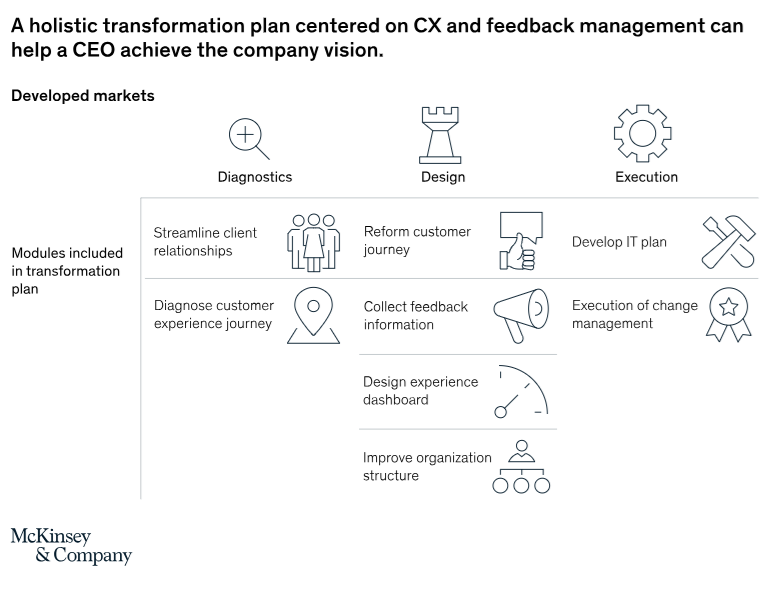
A steel manufacturer worked with McKinsey & Company to transform its entire organization to become more customer-centric. By mapping B2B customer journeys, improving feedback channels, and involving every team in the process, they boosted gross profit by 4%. This shift toward customer experience not only increased loyalty but also positioned the company to thrive through future challenges. The transformation process played out in three steps: Diagnose, Design, and Execute.
5. Leverage your networks for deeper relationships and new pipeline
Cold outreach is hard. Warm connections are easier and more effective. Tapping into your existing networks (customers, partners, advisors) to build new relationships can supercharge your pipeline and deepen trust.
Think about it: if a friend introduces you to a new product, you’re way more likely to check it out than if a random ad pops up. The same logic applies to your customers. Warm intros from trusted sources—be it a satisfied customer, a partner, or a team member—carry weight. Instead of focusing on marketing and selling to your entire addressable market, you hone in on your network for optimal success.
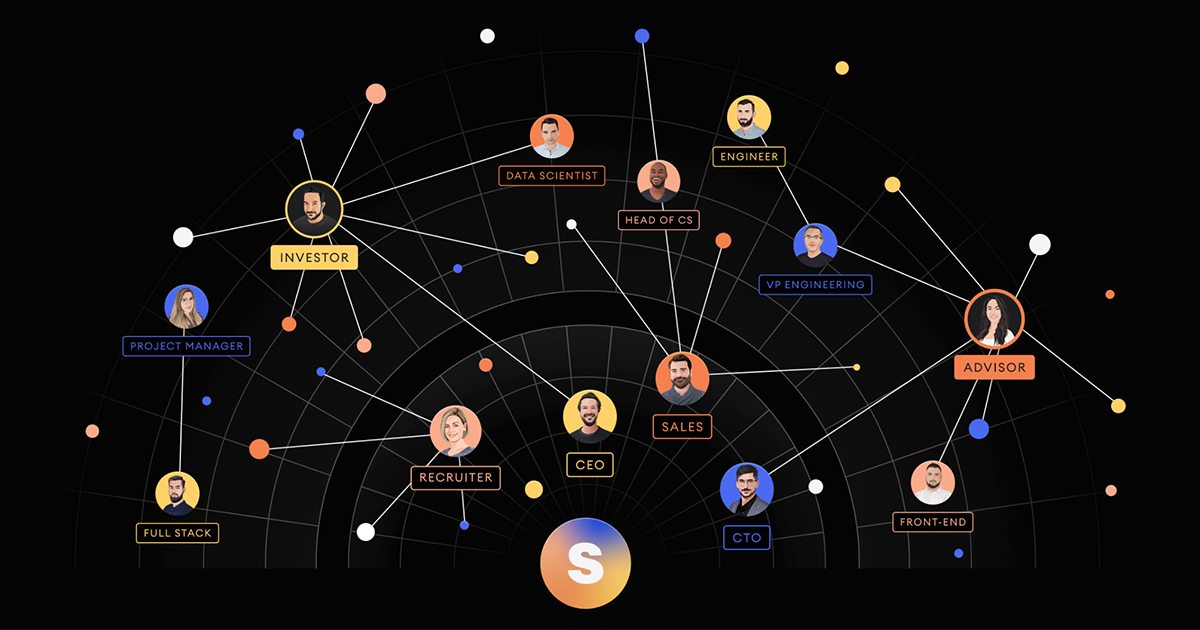
Use tools to map out your networks and identify who can open doors for you. Go-to-Network platforms like Commsor make this a breeze, helping you pinpoint the warmest paths to potential customers. The result? Higher conversion rates, better engagement, and stronger relationships.
Tips to implement your own Go-to-Network strategy:
- Map out your company’s existing network with Commsor
- Identify high-value connectors (customers, investors, partners)
- Prioritize your warmest intro opportunities
- Personalize every intro request with context
- Create an “intro bounty board” to incentivize referrals
- Leverage social selling to expand your network
- Engage with partners for co-selling opportunities
6. Cater the buying process to your customers
Want to close deals faster? Align your sales process with your buyer’s needs—not just your own preferences. Too many sales reps make buyers jump through hoops, like withholding demos until the second call. If your buyer is ready, why delay? Focus on what they care about and adapt to their style and pace. Ask questions, listen, and customize your approach. Tools like Luster can help you understand buyer personalities, communication preferences, and how they want to be sold to. Work with your buyers, not against them, and watch deals move forward smoothly.
“Your sales strategy should give you the capability to learn about who you’re selling to and become an expert in the things they care about. Ask questions to figure out how they like to buy. Be more human in your approach instead of forcing people through a specific buying process that reeks of commission breath.”
- Christina Brady, Co-founder and CEO of Luster
Questions to ask during the buying process:
- How do you typically like to buy software?
- How much time do you set aside for initiatives like this?
- Are you usually the only person involved in decisions?
- What brings you into the room?
- What can I do to help you?
- How would you like to get to know the technology?
- Do you want to email back and forth?
- Do you want to hop in a meeting?
- Do you want to watch a demo video?
For more sales tips, be sure to check out our Go-to-Network for Sales Playbook.
7. Address concerns quickly
No one likes to feel ignored. When a customer has a concern or problem, how quickly you respond can make or break your relationship with them.
Fast responses show customers that you care about their issues and that you respect their time. Even if you don’t have an immediate solution, a quick acknowledgment like, “We hear you and we’re on it,” can make a world of difference.
Set up processes to ensure speedy responses. Use real-time tools like Slack or chatbots for instant acknowledgments, and empower your support team to solve problems without endless escalations.
And here’s the kicker: follow up after resolving the issue. A quick “Did we fix that for you?” shows you care about getting it right. Customers remember when you go the extra mile and will reward you with loyalty.
Lightspeed Commerce, a unified point of sale and payments platform, implemented Intercom’s Fin AI chatbot to improve customer support interactions. Fin AI begins every customer support interaction and was able to resolve 65% of issues without having to pass the customer onto an agent. Meanwhile, agents utilizing AI closed 31% more conversations daily, as they had the right information at their fingertips. In terms of customer satisfaction, the company has gotten a lot of positive anecdotal feedback.
8. Build a community around your brand
A thriving community can take your customer relationships to a whole new level. Why? Because communities aren’t just about your brand, they’re about shared experiences, learning, and growth.
Create spaces where your customers can connect, ask questions, share wins, and help each other. The goal is to build a place where your customers feel like they belong.
When customers see your brand as a community, they invest in it. They’re not just buying a product; they’re joining a network of like-minded people. That’s the kind of loyalty you can’t buy with ads. Communities create value that compounds over time, so make sure to get
8 different ways to foster community:
- Dedicated online forum
- Slack channel
- Comments section on social posts
- In-person meetups
- Virtual events and webinars
- Private LinkedIn or Facebook groups
- Customer advisory boards
- Interactive Q&A sessions with your team
9. Optimize for convenience
Amazon reached $620 billion in annual revenue for a reason, and that reason is convenience. The company made it wildly convenient to purchase any type of product and have it arrive on your doorstep in one or two days, almost like magic.
In B2B, convenience might not mean same-day delivery, but it still matters a lot. Make it simple for buyers to book meetings with you by offering easy scheduling options. Streamline your onboarding process so customers can get up and running quickly. Provide self-serve resources like FAQs, video tutorials, and knowledge bases so they can solve problems on their own.
You can also try offering flexible payment terms, even for your large contracts. You might use something like Capchase Pay to allow enterprise customers to pay in installments so buyers don’t have to get big upfront payments approved. After implementing Capchase Pay, Creyos, a healthcare platform, experienced a 50% increase in their ACV because they were able to go after bigger customers without scaring them away with massive upfront payments.
Every time you remove friction, you make it easier for customers to say “yes,” and kickstart the relationship on a great foundation.
Best practices for sustaining existing customer relationships
Winning a customer is one thing. Keeping them? That’s where the real magic happens. Sustaining relationships isn’t about grand gestures, it’s about consistently showing up and adding value. Here are five no-nonsense ways to keep your customers coming back for more.
- Follow-up regularly - Don’t be a stranger after the deal closes. Check in periodically to see how things are going. A quick “Hey, how’s everything working out?” can uncover issues early and show customers you care about their success, not just their wallet.
- Show gratitude - Everyone loves to feel appreciated. A simple thank-you email, a handwritten note, or even a small surprise can make a big impression. No one’s asking for fireworks. Just a genuine “thanks for being here” goes a long way in making customers feel seen.
- Ask for (and act on) feedback - Your customers’ insights are gold. Don’t just ask for feedback, use it. When you make changes based on their input, let them know. A quick message like, “We updated this feature based on your suggestion!” shows you’re listening and adapting. That builds trust.
- Provide consistent value - The relationship doesn’t end with the purchase. Keep delivering value through useful content, think guides, how-tos, or webinars. If your customer thinks, “Wow, this brand keeps making my life easier,” you’ve nailed it.
- Celebrate milestones - Did your customer hit a big goal or mark a year with your product? Celebrate it! A congratulatory email or a small gift can make customers feel like part of your community. It shows you’re invested in their success, not just your own.
Keep it simple, keep it genuine, and your customers will stick around.
Building customer connections is an ongoing process that requires intention, consistency, and genuine effort. The payoff is worth it in terms of loyalty, growth, and long-term revenue.
Ready for predictable pipeline? Learn how to operationalize warm introductions with Commsor.


