


11 B2B Referral Program Ideas That Work
If your referral program consists of crossing your fingers and hoping your happy customers will magically bring you more business, then it's time for a new strategy. A successful B2B referral program isn’t just about asking for intros, it’s about operationalizing referrals into your sales and marketing motion. When done right, referral programs bring in loyal customers, shorten your sales cycle, and generate high-quality leads that convert faster than cold outreach ever could.
But here’s the thing: most referral programs flop because they’re too complicated, not rewarding enough, or completely forgettable. So, we’re cutting through the noise and giving you several B2B referral program ideas that actually work.
Let’s make the most of your team’s and customers’ networks.
1. Build an intro bounty board
Most referral programs rely on waiting—waiting for customers to stumble upon a referral link, waiting for them to remember to share it. But waiting doesn’t fill pipelines. An intro bounty board lets you take control by listing your top target accounts and sending it to your network to see if they can connect you. It’s a proactive, scalable way to source warm introductions without leaving things to chance.
With Commsor, you can set up a centralized hub where people browse your targets, make intros, and track rewards. Sweeten the deal with incentives like $500 per meeting held or 10% of closed revenue, and watch your network turn into your best sales team.
Example messaging to use when sending:
"We built an intro bounty board with some target accounts I’m looking to break into. If you make an intro, I’ll ship you $500 after the meeting is held and 10% of the deal close. Let me know if you want in!"
2. Offer different monetary incentives
The right B2B referral program incentives will make a massive impact on your success.
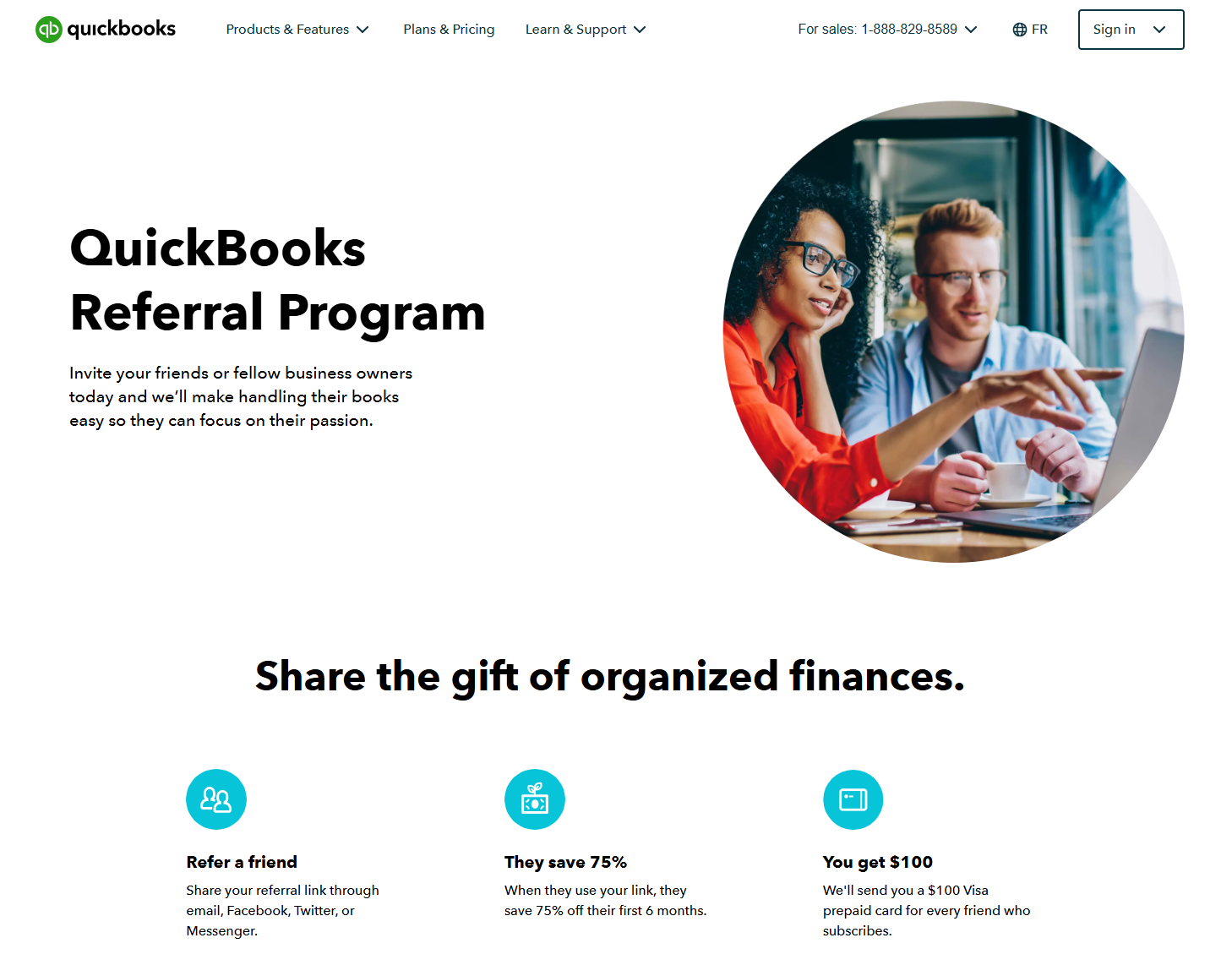
With standard referral programs, it’s common to offer an incentive to both the referrer and the new customer. Programs are often structured like this example from QuickBooks, where the existing customer gets $100 for a successful referral and the new customer gets a 75% discount to encourage them to sign up via their friend’s link.
However, if you want to proactively increase referrals, you’ll need to get more creative and offer larger incentives.
Here’s a behind-the-scenes look at how we incentivize referrals:
- Meetings held - Ex: Send the referrer $500 after the prospect attends the meeting.
- Deal closure - Ex: Offer 10% of a closed deal.
- Kickback - Ex: Give the referrer 10% or allow them to choose a discount on the contract.
- Reselling - Ex: Give resellers 15% of the closed deal or a discount for their client
- Opt-in - Ex: Offer a hesitant customer $200 to get them to onboard to Commsor so we can scan their network.
These larger monetary rewards make everyone’s efforts more worthwhile. Our sales and partnership teams are more likely to succeed, and our customers are more likely to pay attention and get involved.
3. Capture more customer intros
Getting referrals from satisfied customers isn’t just about asking, it’s about asking at the right time. Timing is everything. A well-placed referral request when a customer is excited about your product is far more effective than a generic, out-of-the-blue ask. The key? Look for moments when your customers are already feeling the impact of your solution.
The best times to ask for a referral:
- Right after a deal closes (enthusiasm is high)
- After a positive customer experience (they’re seeing results)
- When they share social proof (showing they value your company)
A simple, well-timed ask can turn current customers into your most valuable referral engine without feeling overly transactional.
Example messaging when you want a specific intro:
"Hey {Name}, I noticed you are connected with {Target Name} from {Company}. I think we could really help them with {project}. Any chance you’d be open to making an intro? I can write the email to make it easy."
Example messaging for an open-ended request:
“Hey {name}, I know this is a really big ask, so please tell me to kick rocks if you're not comfortable with it. Do you know any other {title} that are dealing with {pain 1}, {pain 2}, {pain3} that we could help with? Our strongest customers tend to come from people we already know. I'm happy to ghostwrite you a message if that makes it easier. Appreciate it!”
4. Set up referral opportunity meetings
Most teams treat referrals as a side hustle, something they’ll get to when they have time. But if you want consistent, high-quality referrals, you need to operationalize the process—and that starts with dedicated referral meetings.
“We're a big fan of what we call the Power Hour, which is once a week. We'll literally get the senior executives on the phone with the prospect list from the data that we can pull from Commsor or Sales Nav and see where we have that overlap.” - Adam Jay, Co-founder and CEO of Revenue Reimagined
Set up a weekly session with executive sponsors (CEO, CTO, VP of Marketing) to:
- Review your top target accounts
- Identify warm connections within their network
- Have the executive sponsor call the prospect in real-time and pass the conversation to an AE
On top of that, schedule monthly calls with top referrers—loyal customers, partners, and investors—to review their network and uncover new intro opportunities. A structured approach means you’re never leaving referrals to chance—you’re making them a predictable pipeline source.
5. Host referral contests with tiered rewards
A little competition goes a long way. A referral contest with tiered rewards adds urgency, excitement, and a clear goal for referrers to work toward. Instead of passively hoping for referrals, you create a gamified experience that keeps your network engaged.
Make it work by:
- Setting clear rules, timeframes, and referral goals.
- Offering progressive rewards—the more referrals, the better the incentives.
- Sending weekly leaderboard updates to keep the competition fierce.
For example, one referral earns $200, while five referrals unlocks VIP event access (more on VIP treatment below). The key is to make rewards valuable and motivating, turning casual referrers into full-on brand ambassadors.
6. Offer VIP networking opportunities
Not everyone wants cash for referrals, some would rather have access. Give your top referrers something money can’t buy: an invite to exclusive networking events with high-level professionals, industry influencers, and executives. This positions your brand as a connector of valuable relationships, deepening loyalty while making referrals feel like a real privilege.
Why it works:
- Creates unique, non-monetary value.
- Strengthens relationships with your most engaged advocates.
- Positions your brand as a hub for industry connections.
Implementation tips:
- Host invite-only virtual or in-person events for top referrers.
- Partner with influencers or executives to boost credibility.
- Offer early access to premium content, new features, or products.
- Provide an introduction concierge to connect attendees with key contacts.
7. Send personalized thank-you gifts
Sometimes, a simple “thank you” goes a long way, especially when it’s thoughtful and personal. Instead of generic gift cards, send hand-picked gifts that reflect your referrers' interests or professional needs. This small but meaningful gesture strengthens relationships and encourages future referrals without feeling transactional.
Take the time to learn about your referrers, their industry, hobbies, or favorite brands. Choose gifts that are useful, unique, and relevant, and always include a handwritten note to show genuine appreciation.
Of course, some people are hard to get to know and don’t give up much information about their personal life. In those instances, you can fall back on gift ideas that can work for just about anyone.
Creative B2B gift ideas:
- High-quality notebooks or pens for note-taking pros
- Industry-specific books with a personal inscription
- Smart desk gadgets (wireless chargers, blue-light glasses)
- Customized swag (not the boring kind—think premium, not promotional)
- Local artisan coffee or craft snacks for a personal touch
8. Get your investor’s entire network involved
Your investors and advisors aren’t just funding your company, they’re sitting on a goldmine of potential customers. Instead of relying on one-off intros, get them to onboard their entire portfolio into Commsor, turning their network into a scalable referral engine.
Frame the conversation around shared revenue growth and churn reduction, helping their companies succeed means better returns for them, too.
Example messaging to send to your investors:
“We’ve been looking into ways to find and track warm intros. I wanted to chat with you about onboarding all of {VC Name’s} portfolio companies.
By getting everybody into Commsor, we can open up warm opportunities. Sellers can find connections, request intros, get them approved, and send them.
Between all of us, we’ll be able to create really valuable, contextualized intros to key buyers. This could have a major impact for {VC Name}.”
9. Ask for referrals when a deal gets stuck
A stalled deal doesn’t mean a dead deal, it just means you need a new way in. If a prospect goes dark, don’t keep chasing them down the same path. Instead, reach out to a mutual connection who can help resurface the conversation or introduce you to someone else internally.
This is where multithreading comes in. Relying on one contact is risky. You need to connect with multiple decision-makers across different teams. Maybe your champion loves your product, but the CFO, legal, or procurement teams need to sign off. A warm intro to the right stakeholder can get things moving again.
Here’s a behind-the-scenes look at how we multithread deals:
- For our team, multithreading in an economic buyer is a requirement to progress a deal from Stage 1 to Stage 2.
- On average, we have 5 connections with a single target, so if one person doesn’t want to make the intro, we move on.
- To increase our average number of connections, we onboard everyone possible (customers, investors, partners, team members).
10. Utilize influencers to fuel referral growth
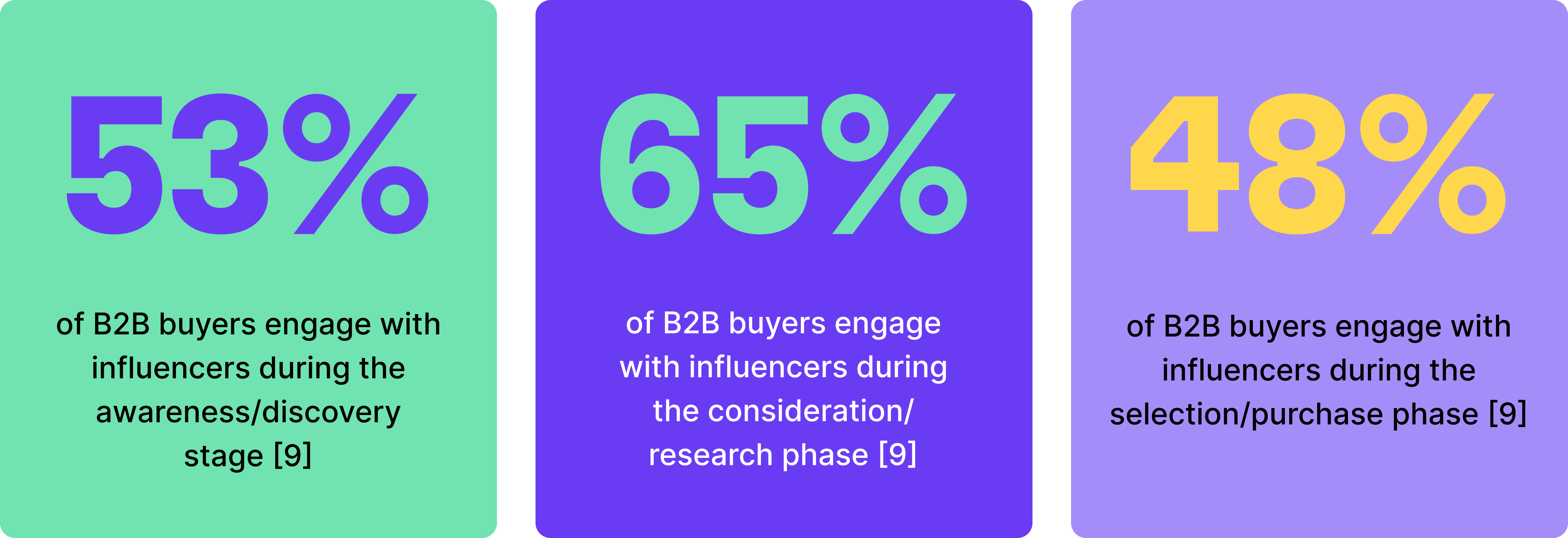
Influencers can be powerful referral engines. When industry experts, respected customers, or consultants recommend your product, their networks listen. Leverage these trusted voices to drive warm introductions and expand your reach beyond your existing contacts.
Encourage B2B influencers to share your product with their audience, make direct referrals, or even co-host events and content. Their credibility builds trust fast, making referrals more likely to convert. And, when a late-stage deal stalls, bringing in an influencer to validate your solution can help push hesitant buyers across the finish line.
You can incentivize influencers using the same monetization strategies mentioned above, or strike up special partnership deals.
11. Give charitable donations on behalf of referrers
Not everyone is motivated by cash incentives. Some prefer making an impact. A referral marketing program that donates to charity on behalf of referrers lets them do good while helping your business grow. It’s a win-win: you get warm introductions, and they get to support a cause they care about.
How to make it work:
- Let referrers choose from vetted charities or nominate their own.
- Clearly communicate the impact of each donation, e.g., "For every referral, we'll donate $100 to the chosen charity."
- Share the collective impact of the program. People love seeing the difference they’re making.
For more inspiration, check out our guide with B2B referral program examples. Whether you’re leveraging influencers, hosting contests, or setting up an intro bounty board, the key is to operationalize referrals so they become a predictable, repeatable source of high-quality leads.
Ready to drive more referrals and warm opportunities? Check out Commsor.


