


100 Introduction Email Subject Line Templates
Prefer watching a video instead of reading? Check out the video above!
Referrals are the secret sauce of B2B growth, but too many companies underestimate their power. 84% of B2B buying processes start with a referral, and deals sourced this way have a 69% faster close time. Translation? Referrals aren’t just a “nice to have”—they’re a game-changer for building trust, slashing acquisition costs, and closing deals faster.
That’s all because referrals tap into existing relationships, which are the foundation of credibility in the business world. When a trusted partner, advisor, or happy customer recommends your product, potential customers are already primed to listen. And the numbers back it up: referral-driven deals churn less and deliver a higher ROI than outbound efforts.
In this guide, we’ll show you how to create a referral program that’s not just effective but also scalable and strategic. Forget overcomplicated processes and underwhelming results. It’s time to build a referral engine that fits seamlessly into your sales cycle and drives consistent, high-quality leads.
Understanding B2B referral programs
Business to business referral programs act as a scalable growth engine for any company that knows how to use them.
What is a referral program?
A referral program is a formalized way to encourage your customers, partners, or advocates to recommend your business to others. In exchange, they receive incentives like discounts, cash rewards, or exclusive perks. Think of it as word-of-mouth marketing with measurable ROI.
How are B2B referral programs different from B2C?
B2C referral programs are typically simple—one click, one reward. B2B, on the other hand, often involves longer sales cycles and multiple stakeholders, which means you need more thoughtful incentives and strategic tracking. It’s not just about who buys, but who influences the deal along the way.
Referral programs VS affiliate programs VS partnership programs
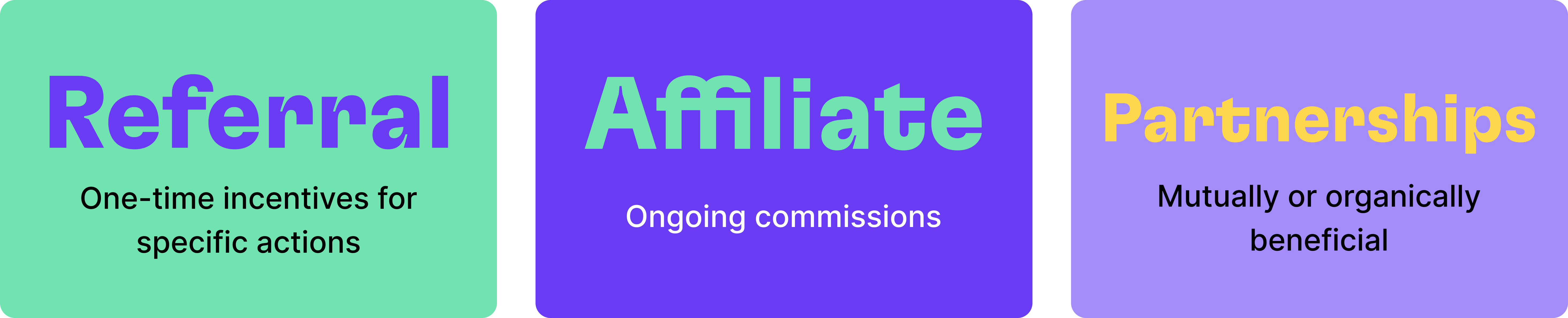
Referral programs focus on leveraging existing customer relationships to generate warm leads. Participants are incentivized to make a referral (often through cash rewards), but they don’t earn ongoing commissions.
Affiliate programs, on the other hand, are more transactional and reward anyone who drives traffic, regardless of connection. Affiliate programs also typically offer an ongoing percentage of the cost of the product or service, often 20 to 30%.
Partnerships go deeper, creating co-selling opportunities and shared goals, making them ideal when trust and collaboration are already established. Partnerships are often mutually incentivized and managed through warm introductions.
Which types of companies can benefit from a referral program?
Scalable companies with happy customers or an engaged ecosystem are primed for referral programs. If your industry has natural advocates—like influencers, advisors, or loyal users—referral programs can supercharge your growth. You can encourage them all you like, but ultimately people need to take action and refer you using their unique link.
If you lack the sort of influencer and customer ecosystem that will deliver referrals, a partnership program might be a better fit, leveraging co-branded efforts, mutual value, and email intros rather than waiting around for referrals. These sorts of programs were once very difficult to track, but can now be operationalized with Commsor.
Examples of B2B referral programs
Check out these examples and get inspired.
1. QuickBooks
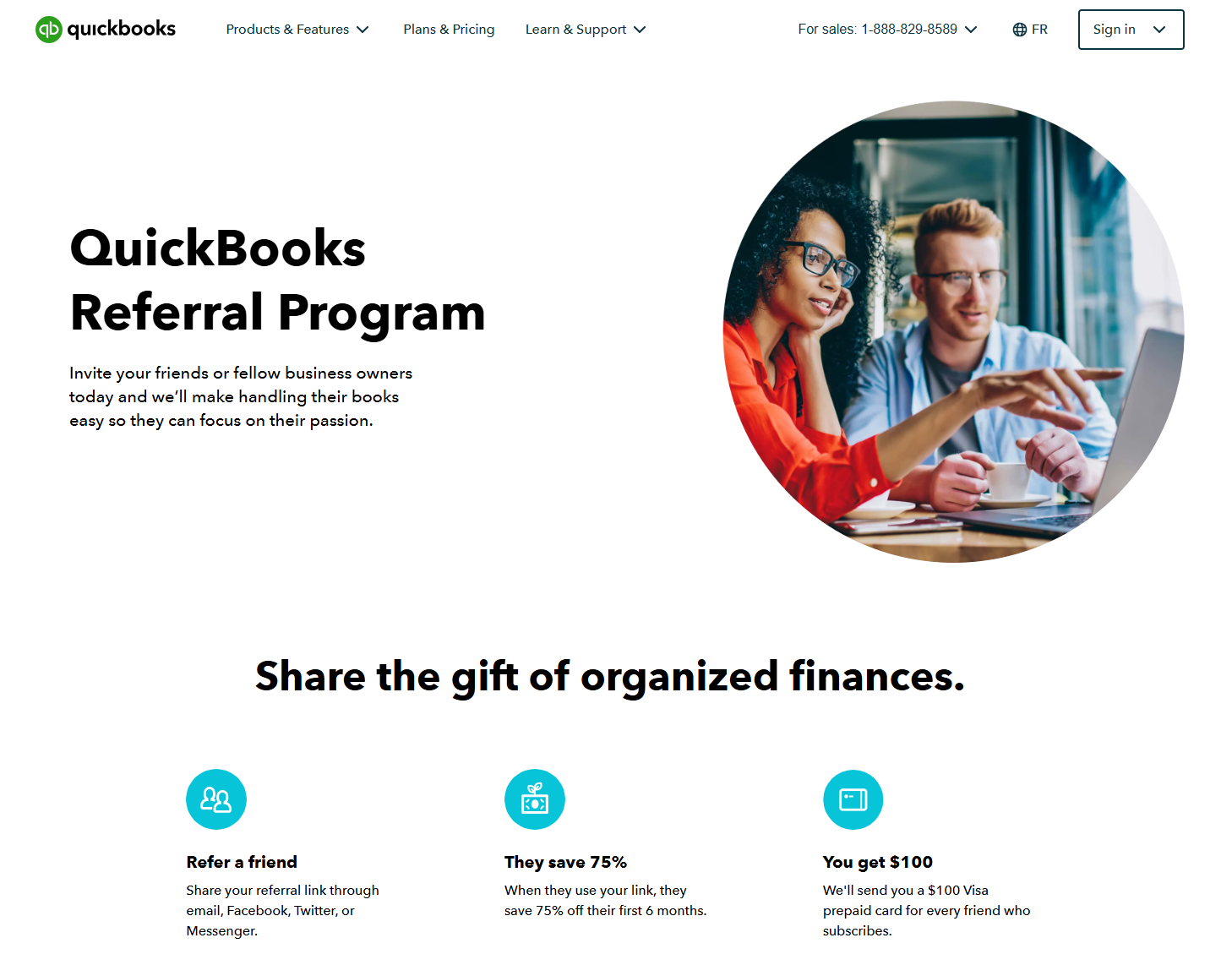
QuickBooks has a Refer a Friend program that is sweet and simple. Links can be shared directly or on social media. When someone uses a referrer’s link to sign up, they save a whopping 75% off their first six months, while the referrer earns a $100 Visa gift card. This program is a great example because both parties are incentivized to use the link, making tracking and rewards more accurate.
2. DesignPickle
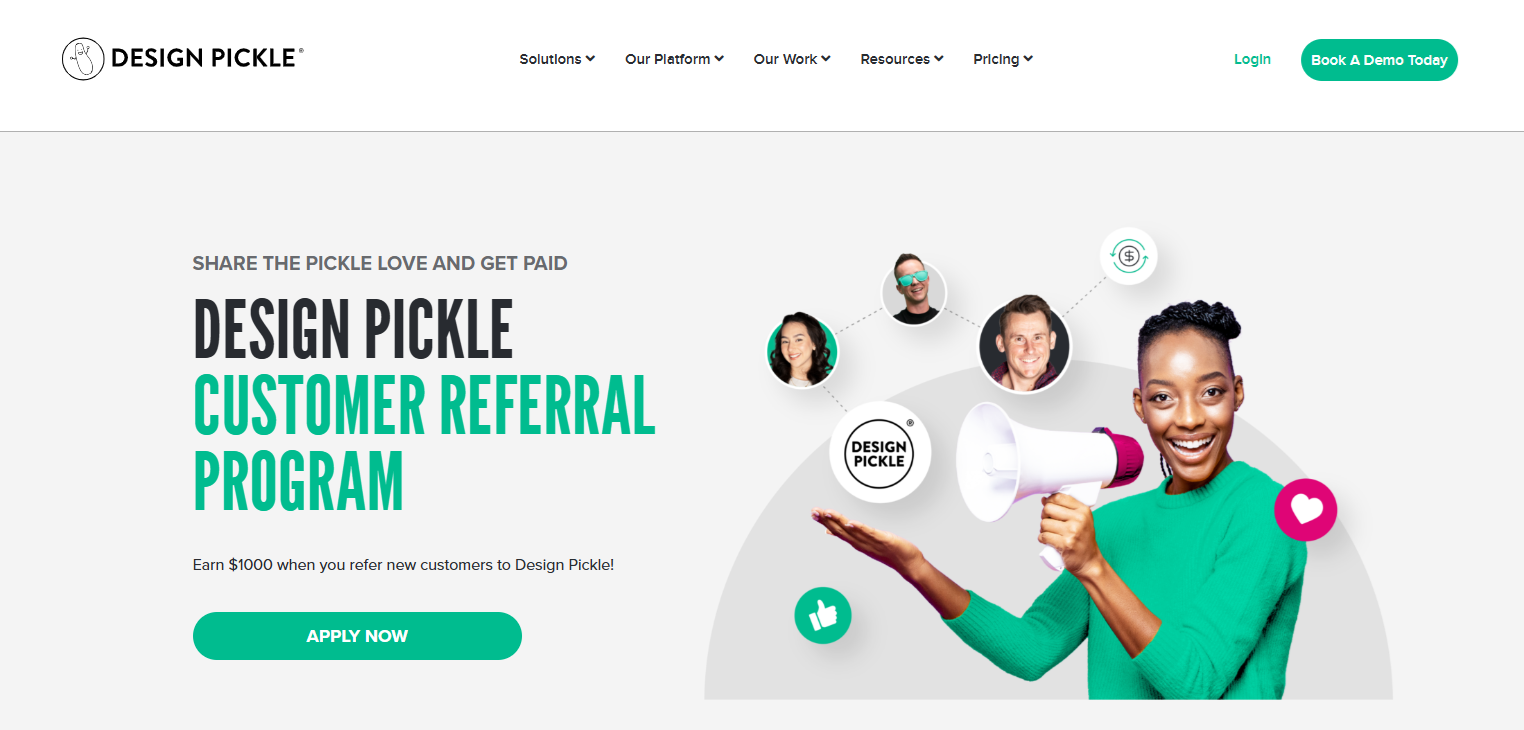
DesignPickle is wise to offer a major incentive for their referral program. Participants earn $1000 for anyone who becomes a paying customer for more than 30 days. While this might seem like a lot, their lowest monthly graphic design subscription is $1,249, so the referral incentive is cheaper than if they were to give a long-term affiliate commission, while still being high enough to be effective.
3. MainStreet
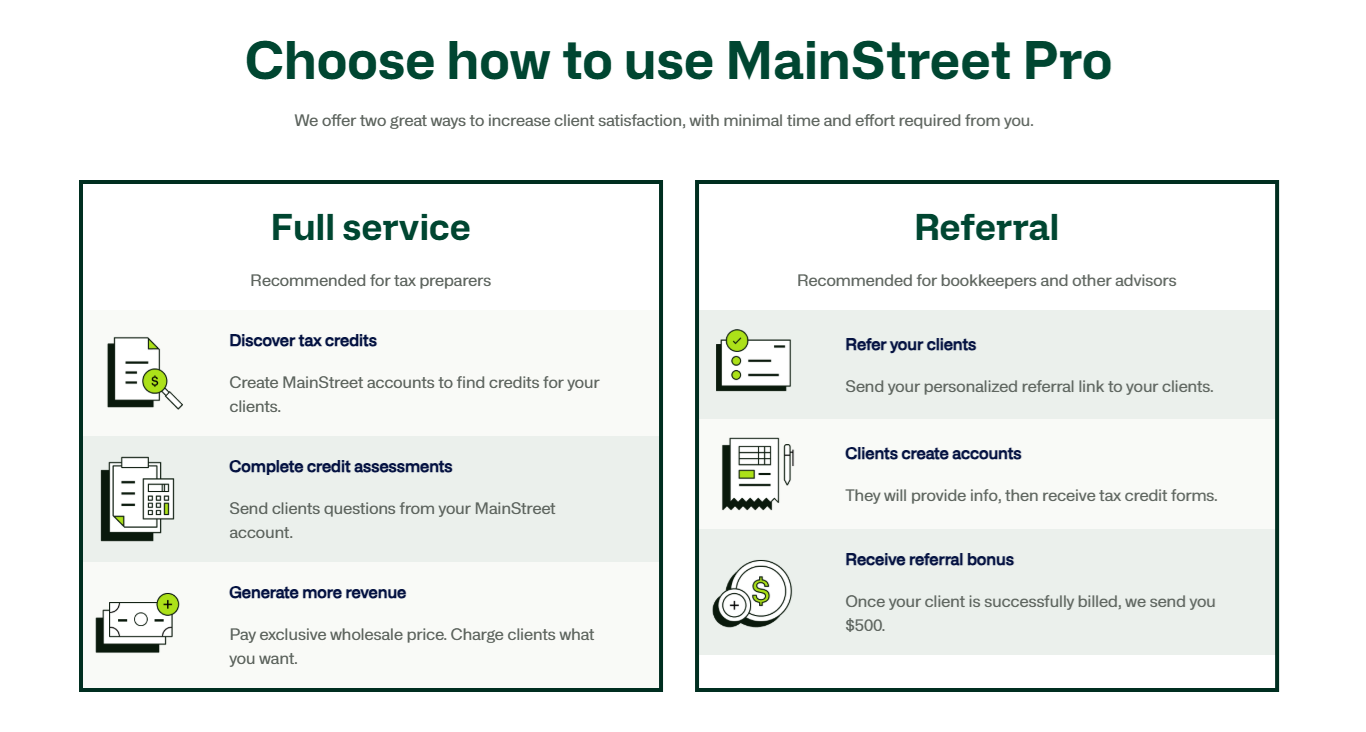
MainStreet is an AI-driven tax credit platform. Their MainStreet Pro program offers two different ways to earn. Tax preparers can pay an exclusive wholesale price for the software and charge clients whatever they want. Bookkeepers and other types of advisors are encouraged to join the referral program, recommend the software to clients, and receive a referral bonus of $500. This offers the perfect example of how you can promote your referral program without losing customers for your preferred business model.
How to implement an effective B2B referral program
Follow these steps to build a B2B referral marketing program that delivers high-quality leads.
1. Define your goals and assess readiness
Every great referral program starts with one simple question: What are you trying to achieve? Whether it’s generating more leads, increasing deal size, or driving higher retention, clarity is key. Without defined goals, you’re just wishing and hoping. Start by pinpointing what success looks like—then reverse-engineer your program to make it happen.
Next, make sure you’re ready to deliver. Referrals only work if your product is worth sharing. Are customers happy enough to recommend you? Is your customer support team prepared to handle the extra workload referrals can bring? A great program isn’t just about getting new business—it’s about keeping the new customers you earn.
Goals and KPIs to track:
- Referral participation rate: Percentage of customers actively referring others.
- Conversion rate: Percentage of referred leads that turn into paying customers.
- Lead quality: Measure the lifetime value or ACV of referred customers versus other acquisition channels.
- Retention rate: Track how long referred customers stick around compared to others.
- Customer satisfaction (NPS): Are your customers happy enough to refer in the first place?
2. Identify and activate your referral network
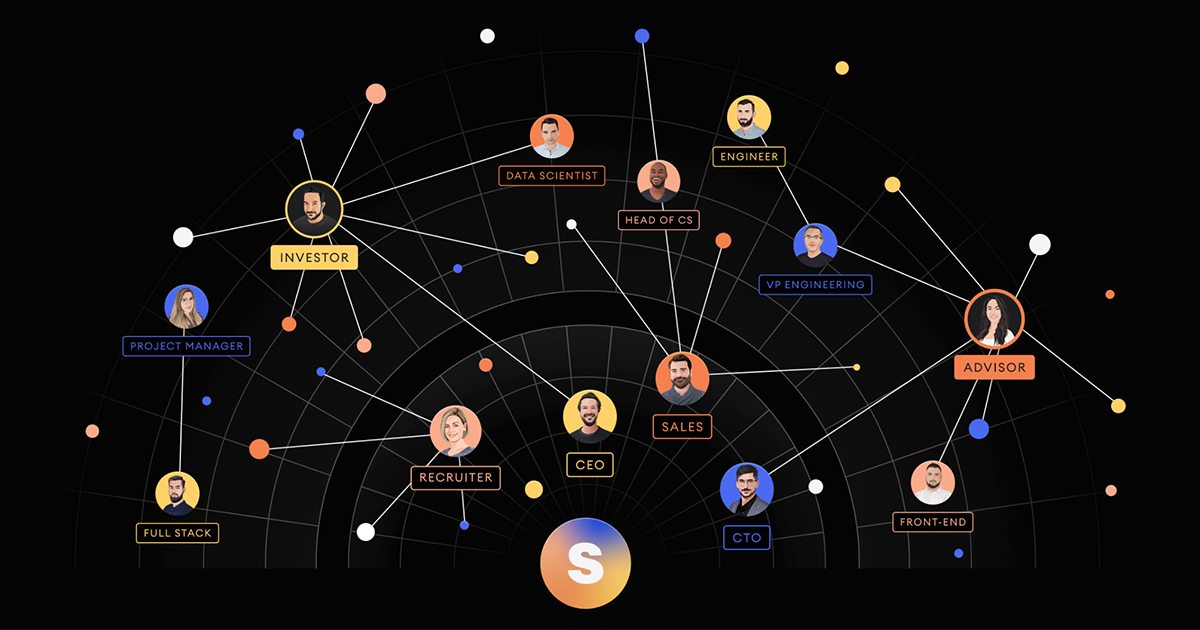
B2B companies should start by tapping into the goldmine you already have—your loyal customers, trusted partners, advisors, and even employees. These are the people who know your product, believe in it, and are most likely to recommend you.
Mapping these connections doesn’t have to be complicated. Tools like Commsor’s Network Intelligence make it easy to uncover strong relationship paths hidden in your CRM or social networks. The goal? Find the shortest, warmest route to your next big customer.
Start with your biggest fans. Look for advocates who’ve left glowing reviews, participated in case studies, or scored high on NPS surveys. These folks already have skin in the game and are eager to help.Before you go all in, do your homework. Talk to people in your network about your referral plans. Ask if they’d be willing to refer you, what incentives would motivate them, and how they’d want the process to work. Bonus points if you learn about other referral programs they’ve joined and why they like them.
People to approach:
- Loyal customers
- Partners
- Advisors
- Employees
- High NPS scorers
- Positive reviewers
3. Structure a program that motivates action
No one wants to jump through hoops for a referral program. If your rules are confusing or your process feels like a scavenger hunt, even your biggest fans will lose interest. Keep it simple, transparent, and laser-focused on outcomes. Make it crystal clear what participants need to do and what they’ll get in return.Incentives matter—big time. Cash and gift cards are always popular, but in B2B, perks like free subscriptions, premium features, or exclusive event invites can be even more compelling. The key is knowing your audience and tailoring rewards to what actually motivates them.
Actions you can incentivize:
- Booking a demo
- Filling out a form and watching a video
- Completing a form and downloading an ebook
- Starting a free trial
- Becoming a paying customer
- Purchasing an audit or consultation
- Signing up for a course or training session
Incentives that work in B2B:
- Cash bonuses or gift cards
- Discounts on future purchases or subscriptions
- Free upgrades or premium features
- Exclusive access to events, courses, or webinars
- Tangible rewards like tech gadgets or branded swag
- Donations to a charity of the referrer’s choice
A program that’s easy to understand and offers rewards people actually want? That’s how you get results. Check out our guide to referral incentives for more inspo.
4. Embed referrals in the buyer’s journey
Referrals aren’t just a top-of-funnel tactic—they can be woven into every stage of your sales process. When you combine referrals with warm introductions, you unlock a strategy that’s not just about getting leads but about navigating your way into target accounts and advancing deals.
Key stages to embed referrals:
- Top of the funnel: Empower satisfied customers to share unique referral links. It’s an easy, low-pressure ask that can drive a steady stream of qualified leads into your pipeline.
- Mid-funnel: Don’t stop with one contact. Multithread enterprise deals by asking for introductions to other stakeholders in the account. This strengthens your position and reduces reliance on a single decision-maker.
- Stuck deals: Silence isn’t always the end of the road. Use a backchannel referral to re-engage a quiet prospect. A nudge from someone they trust can get things moving again.
Once you’ve got a referral to a company, make that account a priority. Use Commsor’s Network Intelligence to uncover additional connections within the organization and secure warm introductions to other decision-makers. This multithreading strategy not only builds credibility but also ensures you’re deeply embedded across the buying team.
When multithreading, you might send an email like this one:
“Hey [Name], I just spoke with [Contact] at [Company] about [Your Product]. I noticed you’re connected to [Other Contact]—could you introduce me so I can loop them in?”
And when a referral-driven deal gets stuck, you could try sending an email like this to someone else on the team:
“Hi [Name], I’ve been in touch with [Contact] at [Company], but they’ve gone quiet. Could you give them a nudge or help me understand if they’re still interested?”
Embedding referrals strategically throughout the buyer’s journey ensures you’re maximizing their impact at every step.
5. Promote and simplify sharing
Even the best referral program won’t succeed if no one knows about it. Promotion is key—but simplicity seals the deal. The easier it is for customers to share, the more likely they are to take action.Make sharing so simple it’s a no-brainer. Use referral software with one-click access to remove barriers by letting customers send referrals without logging in or filling out forms. Include pre-generated referral links or codes that customers can easily copy and paste into emails, chats, or social media. When it’s effortless, sharing becomes second nature.Keep your referral program front and center by promoting it consistently in places your customers already interact with you:
- Email signatures: Add a referral CTA like “Refer a business and earn [reward]” to every email your team sends.
- Newsletters: Dedicate a section to your program, including a quick link to join or share.
- Dashboards: If your product has a customer portal, feature the referral program prominently so it’s always top of mind.
- Social media: Share customer success stories and highlight referral rewards to build excitement.
- Transactional emails: Include referral program CTAs in order confirmations, invoices, and follow-ups.
When sharing is simple, and visibility is high, your referral program becomes a natural part of your customers’ interactions with your brand. This combo of ease and exposure ensures your program gains the traction it deserves.
6. Automate and track referrals at scale
Managing referrals manually is a recipe for chaos. Use referral tools like Friendbuy or GrowSurf to automatically manage the program, generate referral links, trigger rewards, and sync data with your CRM. In addition to referral tracking software, use Commsor to multithread deals. Our platform makes it easy to analyze real relationships in your network, find other contacts to engage with, and drive more warm introductions.Tracking performance is just as important as running the program. By monitoring key metrics, you can identify what’s working, tweak what’s not, and double down on your most successful strategies. Key metrics to monitor:
- Conversion rates: The percentage of referred leads that turn into paying customers.
- Referral participation: The proportion of customers actively sharing referral links.
- Total shares: The number of referrals generated by your program.
- Time to close: How much faster referred deals close compared to other channels.
- Revenue impact: The total revenue generated from referrals.
- Lead quality: The average ACV or lifetime value of referred customers.
7. Reward and acknowledge success
Rewarding success isn’t just about handing out prizes—it’s about building trust and reinforcing the value of your program. A well-structured rewards system motivates participants to keep referring, while public recognition strengthens their connection to your brand. Acknowledge your top referrers, gather their feedback, and use their insights to fine-tune your program for even better results.
Ways to optimize your program:
- Dual-sided rewards: Incentivize both the referrer and the new customer to ensure everyone wins.
- Gamify the experience: Add excitement with tiered rewards, competitions, or recurring bonuses for sustained engagement.
- Celebrate achievements: Highlight top referrers in newsletters, dashboards, or social media to inspire others to participate.
A B2B customer referral program is one of the best ways to leverage existing relationships and drive leads while reducing acquisition costs. You can build a program that consistently delivers measurable results by focusing on clear goals, simple processes, and thoughtful rewards.
Discover the best referrers, partners, and advocates with Commsor.


