


How to Build a Repeatable GTN Flywheel in 30 Days
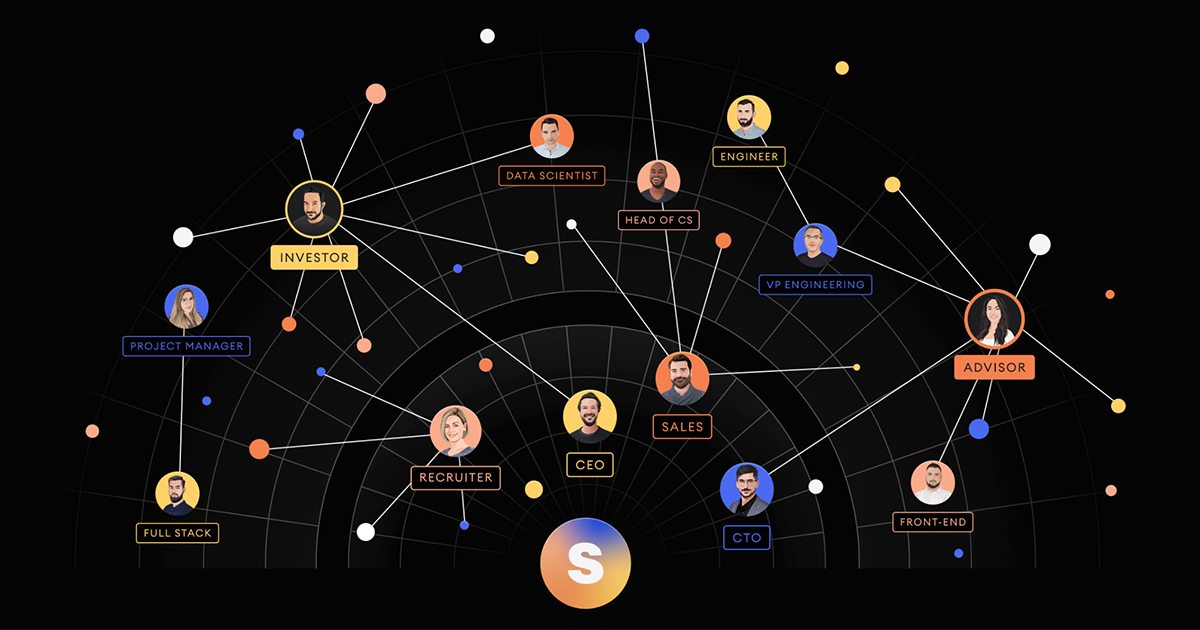
One of the biggest pushbacks for starting a go-to-network sales motion is that it’s “too complex” or it “takes too much work” to get off the ground.
Here’s the deal: if you commit 10–15 minutes a day for the next 30 days, you’ll build a GTN flywheel that consistently delivers warm intros and referrals. No guesswork, no wasted effort. Just a simple, repeatable system that strengthens your network every single day.
Week 1: Lay the Foundation
Your goal this week is to understand who’s in your network and begin light engagement with them. By the end of the first seven days, you should know who your Connectors are going to be. Connectors are the people that will open doors to new opportunities for you.
Day 1: Map the Herd
If you aren’t tracking your network outside of LinkedIn, it’s time to start.
Log in to LinkedIn, and click on your little face in the top right corner. Select ‘Settings & privacy’ and then select ‘Data privacy.’ From there, hit ‘Get a copy of your data’ and choose that option that includes exporting connections. LinkedIn will email you the file when it’s ready.
You will find seven data points in the ‘Connections’ file including:
- First Name
- Last Name
- URL
- Email Address
- Company
- Position
- Date of Connection
Look through the file and mark the following:
- People who you feel you could ask for a favor from (your Connectors)
- People you think might benefit from your solution
- People you generally want to build a relationship with
Day 2: Step Into the Spotlight
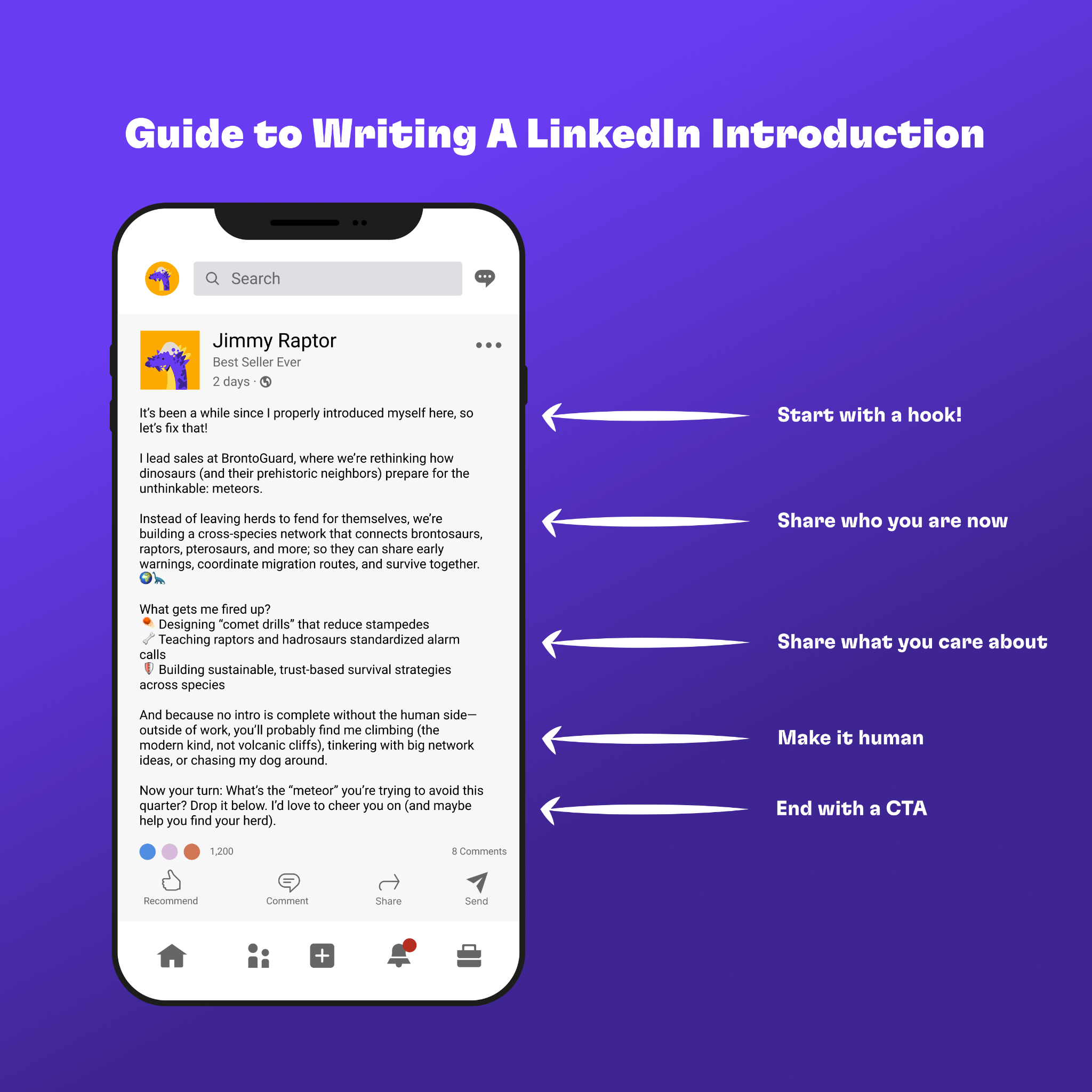
Post a short reintroduction on LinkedIn about what you’re working on. We recommend doing this as a photo or video, and writing a caption that goes along with it.
No one can help you if they don’t know what you need help with. Here are a few things you should include:
- Start with a hook - grab attention in the first line with something relatable
It’s been a while since I properly introduced myself here, so let’s fix that.
- Share who you are now by giving context into your role and what you’re working on
I lead sales at Commsor, where we’re rethinking how sellers build pipeline by leveraging networks.
- Highlight what you care about, like topics, industries, or problems you’re exploring
I’m especially focused on helping sellers unlock warm introductions, referrals, and trust.
- Make it human with personal details
Outside of work, you’ll probably find me climbing, tinkering with referral ideas, or chasing my dog around.
- End with a call-to-action
I’d love to hear what you’re working on this quarter. Drop it below so I can cheer you on.
Day 3: Leave Dino-Sized Footprints
Comment thoughtfully on five LinkedIn posts.
The comment section is one of the easiest ways to grow your network. You don’t have the pressure of the megaphone that is making your own post. And people love it when others engage with their posts.
Remember, don’t just say, “Great post!” But instead, ask questions, think critically, and dig deeper.
Day 4: Revive Old Tracks
Send a message to two past colleagues that you’ve been meaning to catch up with.
There’s a high chance that your prior coworkers work in similar or adjacent industries. And if you’re in sales, that’s good news for you.
Maybe they could benefit from your product. Maybe your new companies could partner on a sale. Maybe they just met someone who may be an even stronger Connector for you.
Day 5: Spot the Connectors
From the list you exported on day one, identify five people from your potential Connector list that have the widest reach. These are people who you want in your corner.
Day 6: Curiosity Call
DM the five Connectors from yesterday just to ask what they’re working on. If you can provide value, do it.
Like we always say: Give, give, give, THEN you can get.
No one likes someone who’s always asking for favors (like intros). So, make sure you’re giving your Connectors value far before you need anything from them.
Day 7: Find the Nest
Join one online group or community where your buyers hang out. Or, if a community doesn’t exist, start thinking about what one might look like.
Being immersed with your buyers in their community will give you deeper insights into the problems their facing, and it will help you learn the language they’re speaking.
There’s nothing more annoying than when a seller tries to tell a buyer about the buyer’s job. You want to understand your buyer’s pain points so well, that you can blend in the community.
If your product is made for B2B marketers -> Find a B2B marketing slack group
If your you sell cybersecurity software -> Find a group of cybersecurity engineers
Week 2: Build Momentum (Deepen engagement + light connects)
This week is about consistency. You want to strengthen trust with those you’ve started engaging with, and begin making low stakes asks. Think about it: If you are building a friendship with someone, you don’t immediately open up with all your secrets. You get to know them bit by bit.
Day 8: Shout Out & Share
Over the past week scrolling on LinkedIn and reconnecting with folks, have you noticed any stand out content? Any creators that are hitting the nail on the head with each post?
Shout them out. Either repost their content, or write your own post about what you learned from them in your first seven days of go-to-networking.
Day 9: Celebrate the Wins
We’re keeping the positivity from yesterday going by congratulating five contacts. Here’s what you might consider giving them kudos on:
- A new job or promotion
- A campaign that they spearheaded
- Celebrating a milestone, like five years at their job
- Hosting, or speaking on a webinar or panel
- Starting a newsletter, or YouTube channel
- Running their first marathon, or another type of physical challenge
- A thoughtful comment left on a post
- A move to a new home, new city, or even a new country
- Adopting a pet
- A post that went viral
There are so many more things to celebrate than the typical job promotion, or campaign launch. You can find ways to get creative in how you acknowledge their wins.
Day 10: Drop Some Knowledge
Write a post sharing a story, a lesson, and/or a POV.
The best posts on LinkedIn always have personal stories attached to them. If you’re to share a strong point of view, also include how you came to that conclusion.
Here’s an example of a post that uses a story to explain a lesson and POV:
A few years ago, I sent what I thought was the perfect cold email.
I agonized over the subject line, tweaked every sentence, and finally hit send.
Silence.
But a week later, I got introduced to the same person by a mutual contact, and they replied within 10 minutes. Same me, same offer… completely different outcome.
That’s when it clicked for me: trust isn’t built by clever subject lines. It’s built by relationships.
Since then, I’ve stopped obsessing over “the perfect email” and started focusing on my network, connecting with the right people, and amplifying what I can bring to the table.
The lesson? A warm introduction will outcompete even your best cold outreach every time.
Day 11: Intel Hunt
Building your network isn’t just about getting warm introductions and referrals. It’s also about getting information that you would have otherwise missed out on.
In a world of AI and automation, we all tend to have access to the same information when trying to break into an account. Getting a piece of intel could make or break whether your message works.
Send a DM to two peers and just ask them, “What market shifts are you noticing?” The more specific you can get with your question, the better the answer will be, too.
Maybe you can ask instead, “How has your B2B tech deal cycle length changed since the beginning of the year?”
Day 12: Prospect Log
Open your list from day one, and identify 10 people that you’d like introductions to. Mark them, so you can keep track of when and if you get an introduction.
Start thinking about any mutual connections you might have that could vouch for you.
Day 13: Resource Drop
Everybody likes free resources that are actually useful.
While scrolling through your feed, think about if you have any resources that are relevant to the conversations you’re hearing.
Your company may have e-books, or maybe you recently heard a podcast that’s helpful. Maybe even this article has been helpful 👀
Either way, send a connection a helpful resource. Something that will actually benefit them. And… it better be ungated.
Day 14: Who Should I Know?
Today’s task is simple. Ask one trusted person, “Who do you know that I should connect with?”
Get an introduction to that connection. Meet them. And see where it takes you.
Week 3: Activate Connectors
By the end of week three, you will have made your first warm introduction ask and delivered value in return to that Connector. This week is about taking the foundation you’ve built with your network and putting it into action.
Day 15: Start a Chat
Write a post that invites conversation. Here’s how you should think about starting a chat:
- Name a challenge everyone feels but not everyone has solved.
- Frame it as a genuine question, not a hot take.
- Signal you want practical input so people feel like their comment is valuable.
- Follow up in DMs with anyone whose answer you can build on.
Here’s an example for a challenge that you may have felt while doing this 30 day challenge:
We all know warm introductions outperform cold outreach by a mile. But here’s the challenge: asking for intros feels awkward, and most sellers never do it.
Curious how you approach it, do you ask directly, drop hints, or build enough trust that intros happen organically?
Would love to hear how you’ve made this repeatable in your process.
And for anyone contributing thoughtful answers, move the conversation to the DMs when it starts getting more in depth. It will help pave the way for you to reach out sometime in the future to chat more.
Day 16: The Specific Ask
You have your list of Connectors, and you know who you want to be connected with. You’ve spent the first two weeks of this challenge building your foundation, and now it’s time to make an ask.
Select someone you want an introduction to, and find a Connector that appears to be close with them. Direct message the Connector with a specific ask. It should look something like this:
Hey Katrine,
Glad we were able to chat more about [insert topic] the other day.
I noticed you were also connected with [insert prospect name] who seems to be facing similar challenges. [Expand on the challenges] I think that my company could help them out with that because of [insert why you would be a help]
Would you be able to make me an intro? Happy to write a short blurb that you could forward on :)
Day 17: Be the Bridge
Hopefully yesterday’s introduction ask went smoothly and you experienced the adrenaline rush of getting a “yes” to an intro ask. Now, it’s time to pass the favor along.
Think about two connections in your network that could benefit from knowing each other.
For example, one of my contractors recently introduced me to another person because she lives in the city I’m planning on moving to. We met for a coffee chat, and now we’re planning to work on some projects together in person.
Ask both parties for consent to be introduced, and once you get the yes, give them the intro!
The key is to introduce people that would genuinely benefit from knowing each other. Maybe they’re in the same industry, or the same stage in their careers.
Day 18: Mini Roar of Value
Today is short and sweet. Drop some knowledge to your network with a quick tip or piece of value.
What have you learned over the past two and half weeks that might benefit your network?
Is there a piece of advice that an early mentor gave you that has stuck with you?
Keep it short, sweet, and impactful.

Day 19: Gather Social Proof
One of the best things about building a strong network is going back to older connections to see how they’re doing.
Oftentimes, sellers end the relationship with customers once a sale is made. The truth is that maintaining the relationship is the key to getting your Go-to-Network process to feed itself.
Reach out to a customer or someone that you’ve helped in the past that has had a positive experience. Ask them for a testimonial, or a quote.
Create content out of that quote, so it can serve as social proof for future prospects to see.
Day 20: Second-Degree Scouting
Second degree connections could be your best sales prospects.
On LinkedIn, first degree connections are those that you are directly connected with. Second degree connections are those that have a mutual connection with you. That means, that you might know someone well enough to give you an introduction and transfer trust before you even send a connection request.
Here’s what you need to do to activate second degree connections
- Go to LinkedIn search and type in your target company or role.
- Use filters to narrow down (location, industry, title).
- Look for people marked as “2nd-degree connections.”
- Identify who the mutual connector is (LinkedIn shows you).
Day 21: Warm Ask, Cool Tone
Now that you know who your second-degree connections are, and who the mutual connection is, let’s reach out to a three first-degree contacts with a message like:
Hey [Name], I noticed you’re connected to [Prospect] at [Company]. I’d love to connect with them about [specific reason]. If you’re open to it, I’d be grateful for the intro. And happy to return the favor whenever I can.
By making light, respectful asks, you normalize intros as part of how you (and your network) do business.
Week 4: Build the Flywheel
Congrats, you’ve made it to the last week of our 30 Day GTN challenge! Now, it’s time to systematize everything we’ve been working on to keep the momentum going.
Day 22: Shine the Spotlight
Over the past few weeks, you’ve met people who brought new perspectives and shared insightful expertise. It’s time to take the light and point it at them. Make a post highlighting someone else’s expertise.
The community you joined in the first week of this challenge is the perfect place to start.
Who have you met that deserves some love? Maybe they are:
- Your community’s leader that makes sure everyone in the community feels seen
- Someone that’s an expert at using your product and could show new customers, or prospects, how to get the most out of it
- An industry thought leader that has a new perspective on the direction of your business
Day 23: Set the Rhythm
You want Go-to-Network to be a system that’s repeatable, so you need to set the rhythm. Starting today, create a weekly habit to do the following:
- Leave five thoughtful comments on peer’s posts
- Send two DMs to people you want to get to know better
- Make one introduction ask
Put a calendar block for 30 minutes once a week to check off this list. It will compound faster than you think!
Day 24: Network Swap
Propose a Connector trade with a fellow sales rep. They can either be at our company, or in an adjacent company. Not a competitor, just someone who has a similar ideal customer profile as you.
Offer to introduce them to three of your most reliable Connectors, in exchange for introductions to three of their Connectors.
Expanding your Connector pool is key to gaining access.
Day 25: The Soft Landing
Instead of reaching out with a cold pitch, send a context-filled message to a prospect. Think of it like easing into their world, not barging in. The goal here is to spark a conversation, not to sell right away.
Here are some templates you can use to give your prospects a soft landing:
Shared Interest
Hi [Name], I noticed you’ve been posting about [topic they shared/post they made]. Really enjoyed your perspective on [specific point].
I’ve been exploring similar themes with other folks in [their role/industry], and thought it could be interesting to compare notes.
Would you be open to a quick chat sometime in the next couple weeks?
Company Milestone
Hi [Name], congrats on [company news, funding, launch, hiring milestone]. That’s such an exciting step.
I know those transitions can bring new challenges as well, curious how you’re thinking about [specific challenge related to their role].
No pressure, but I’d love to hear your take if you’re open to a conversation.
Curiosity-Driven
Hi [Name], I came across your profile while digging into [specific industry trend/company news].
Looks like you’re right in the middle of it at [Company]. I’d love to hear your perspective on what you’re seeing.
Would you be open to sharing a bit over a short call?
Day 26: Roar Out Loud
Take 15 minutes today to write a piece of thought leadership to post on your platform of choice.
Building influence is about consistently showing up with your expertise.
Here are five prompt starts for your post:
- The Challenger POV - Give a contrary opinion to something that is thought to be common practice.
- The Personal Lesson - Write about an old assumption you used to have, and how your opinion shifted.
- The Industry Observation - Call out a change you’ve been noticing in the industry, and what it might mean moving forward.
- The Data Hook - Share an interesting statistic that you’ve recently discovered. Talk about how people can end up on the positive side of the stat.
- The “What Everyone’s Thinking” Take - Speak up about a common frustration that everyone seems to be facing, but no one seems to be talking about.
Day 27: Dinos Say Thank You
Give a public thank you to someone that gave you an introduction this past month. This can happen in a Slack channel, or on a more public forum, like LinkedIn.
Whether the introduction turned into a deal or not, a shoutout to someone helping you never hurts.
Here’s an example of a post:
Big shoutout to [Name]
They recently introduced me to [Prospect/Contact], and that single warm intro sparked a conversation I never would’ve landed through cold outreach.
It’s such a good reminder that the most valuable opportunities don’t come from clever subject lines or high-volume sequences, they come from relationships.
So thank you, [Name], for not just opening a door, but for showing how powerful networks really are.
Curious for others, who’s someone in your network you’re grateful for this week? Tag them below ⬇️
Day 28: Small Group Stomp
Gather together five people in your network that could benefit from meeting each other. Host a virtual 30-minute group chat.
If you work in social media, maybe you get together five social media marketers to chat about recent shifts they’ve noticed in the algorithm.
Or if you work in cyber security, host a hang out with a few engineers to speak on new laws going into effect in the EU.
Or maybe you want to meet with direct peers in sales roles, get them together and ask about what strategies are working for them.
Day 29: Track the Trail
Go back to the spreadsheet you organized in the first week of network mapping. It’s time to update your notes.
Who have you reached out to? Who have you asked for introductions from? Who do you still need to spend time with?
Make notes of how far you’ve come in activating your network.
Day 30: The Reflection
Spend 30 minutes reflecting on how much progress you’ve made over the last 30 days.
Make a post talking about the before and after results of having a go-to-network referral system in place. Here are questions to ask yourself:
- Who are the five people I engaged with most this month, and did those interactions strengthen or weaken our relationship?
- How many warm introductions or referrals did I activate, and what made them successful (or not)?
- What new insights did I learn about my prospects, industry, or competitors from my network conversations?
- Did my content, comments, or conversations this month make me more visible as someone worth engaging with? How do I know?
- Which GTN habits felt natural and energizing, and which ones felt forced? How can I refine my weekly rhythm moving forward?
This 30-day plan is just the start. Dive deeper at GTN University, or book a demo to see how Commsor helps sellers turn networks into revenue.


